Ask what are the struts of a car and the short answer is this: They are structural suspension components that help support the vehicle and control wheel movement. A strut does more than soften a rough road. It also helps locate the wheel, so a worn or damaged one can affect handling, tire wear, and braking stability. Not every car uses struts, though, and a noise over a pothole does not automatically mean yours need replacing.
How a strut works
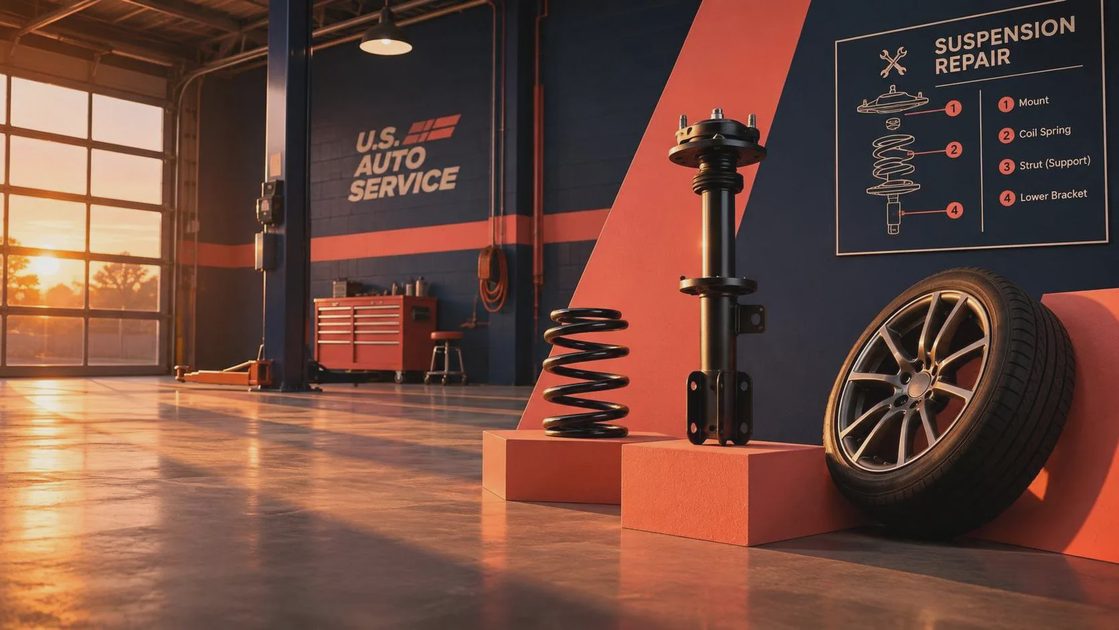
A typical strut combines a shock-absorbing unit with a structural housing. In a common MacPherson strut suspension, it connects the wheel assembly to the body and helps locate the wheel as the suspension moves. A coil spring usually surrounds the strut and carries the vehicle's weight; the damper inside the strut controls the spring's motion.
Think of the spring and damper as a team. The spring compresses when a tire hits a bump and then pushes back. The damper resists that movement, reducing repeated bouncing. Without effective damping, the tire and body can keep moving after the initial impact, making the car feel unsettled.
On many front suspensions, the strut assembly also pivots as you steer. Its upper mount and bearing help make that possible. The exact layout varies, so a repair quote should identify the affected corner and the components involved rather than treating every suspension the same way.
Struts versus shocks: What changes?
Both struts and shock absorbers damp suspension movement. The distinction is structural: A strut is part of the suspension's wheel-locating structure, while a conventional separate shock absorber is not. A vehicle can use struts at one axle and a different suspension arrangement at the other, or use no struts at all.
That matters when comparing estimates. A shop may quote a complete strut assembly, which can include the spring and upper mount, or only the strut itself. Those are different parts lists and can require different labor. Ask for the estimate in writing, with the parts and labor separated.

Signs that justify an inspection
The useful question is not whether a car feels firm or soft. It's whether its behavior has changed. Watch for excessive bouncing after a dip, a floaty feeling at highway speed, unusual body movement during braking, or a wheel that seems to skip across a rough surface. Uneven tire wear can also be a clue, although tire pressure, alignment, rotation history, and other worn suspension parts can cause it too.
A clunk over bumps deserves attention, but it isn't a diagnosis. A worn mount, sway-bar link, control-arm bushing, or another component could be responsible. Similarly, a small amount of surface dampness on a strut is not the same thing as a clearly leaking unit. Have a technician inspect it rather than authorizing replacement based on a noise or a quick glance alone.
If the car suddenly pulls hard, feels unstable, has a visibly damaged suspension, or a tire is rubbing, don't continue driving it as normal. Arrange an inspection or a tow if it cannot be driven safely. Suspension damage can affect control, particularly during an emergency maneuver.
What are the struts of a car supposed to cost to replace?
There is no useful universal price without the vehicle and the repair scope. Parts, labor rates, suspension design, and whether the shop installs complete assemblies or individual components all change the bill. Electronically controlled or air-suspension components can add complexity and expense, but the equipment fitted to a particular car determines the quote.
By the Numbers: Compare estimates using four line items: parts, labor, alignment, and taxes or shop fees. Also ask whether the price covers one side or both sides of an axle. A low headline number for one strut is not directly comparable with a quote for two complete assemblies and an alignment.
Replacement in pairs on the same axle is often recommended so damping is more balanced from side to side. It's not an automatic rule for every situation: If one relatively new component was damaged, ask the shop to explain the condition of its counterpart and the reason for its recommendation.
An alignment check is commonly recommended after strut replacement because disassembly can change wheel alignment. Whether adjustment is needed depends on the vehicle and the measurements. Ask for the before-and-after readings if an alignment is performed; that gives you something more useful than a checkbox on an invoice.
Repair decisions for EV shoppers
An EV still needs a suspension that controls its wheels and supports its weight. Its powertrain does not make struts maintenance-free, and you should not assume every EV has the same suspension layout. When comparing used vehicles, look for uneven tire wear, documented suspension repairs, and damage near the wheels or underbody.
The number they're showing versus the number that matters: A vehicle's mileage is useful context, but the condition of its suspension matters more than a mileage figure alone. Road conditions, impacts, load, and time all play a part. There is no single replacement interval that reliably tells you when every strut is finished.
Before buying a used car, budget for an independent pre-purchase inspection and ask specifically about suspension leaks, loose components, tire condition, and alignment evidence. If the seller says the struts were replaced, request an invoice showing which parts and which axle. That record helps distinguish a completed repair from a vague sales pitch.
What to ask the shop before approving work
Start with the finding: Is the strut leaking, structurally damaged, or failing a physical inspection? Ask the technician to show you the issue and explain whether the mount, spring, or another component also needs attention. Request the manufacturer or brand and part type on the estimate, along with any parts-and-labor warranty terms.
If a complete assembly is proposed, confirm what it includes. If the shop plans to transfer the old spring to a new strut, that's specialized work: A compressed coil spring stores substantial energy and can cause serious injury if handled incorrectly. This is not a repair to improvise with a makeshift compressor.
Finally, compare the total installed price, not just the component price. A clear diagnosis, appropriate parts, and an alignment check when needed beat replacing suspension hardware on a hunch.
No comments yet.