If you are shopping a QX80 Red Sport, start with the insurance quote before you get attached to the trim name. That is the move I make on every luxury SUV, because the badge on the tailgate matters less than the VIN, the repair parts, and the city where the car will live. On a vehicle this size, a small change in deductible or ZIP code can swing the annual bill by hundreds of dollars.
Three years ago, nobody predicted this. Here's the data that proves it: the people who save the most on a big luxury SUV are usually the ones who compare coverage first, not the ones who chase the lowest sticker price. If the listing looks sporty, great, but the real question is whether the QX80 Red Sport is priced like a mainstream SUV or like a full-size luxury rig with expensive glass, cameras, and body panels.
What the badge tells you before you ask for a quote
A lot of shoppers use the phrase QX80 Red Sport as shorthand for a blacked-out or appearance-heavy version of the Infiniti QX80, but insurers do not price imagination. They price the actual vehicle, the exact model year, and the loss history of that VIN. That is why two listings that look similar on a marketplace can return different premiums once you plug them into a quote engine.
By the Numbers: a full-size luxury SUV usually lands above the average family crossover in both collision and comprehensive cost, mainly because parts are pricier and repairs take longer. If the vehicle is financed, the lender will also care about collision and comprehensive, not just liability. For a driver in their 30s with a clean record, full coverage on a vehicle in this class can easily sit in the low hundreds per month, and higher-risk ZIP codes can push it much higher.
The number they're showing vs. the number that matters: the monthly payment looks manageable until a rear-end hit turns into a bumper, sensor, and calibration bill. That is when a cheap policy stops looking cheap.
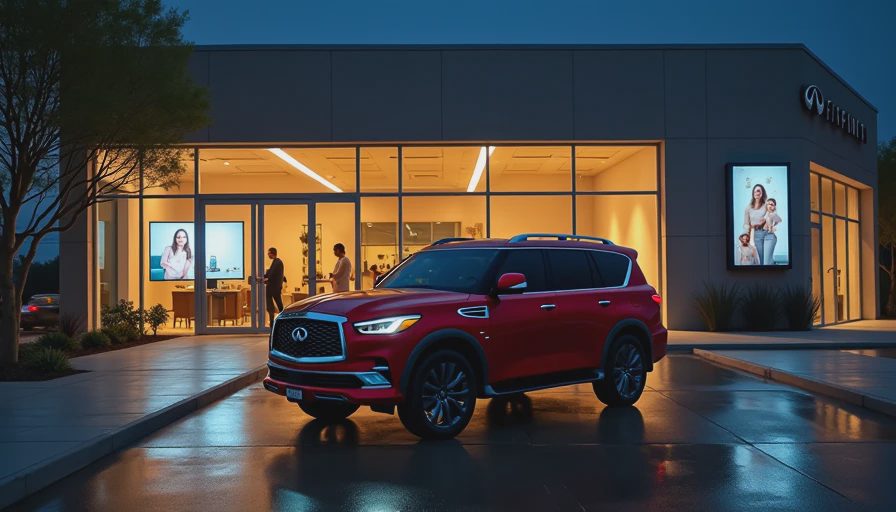
Coverage setup that makes sense on a big luxury SUV
For a vehicle like this, liability alone is usually a false economy unless the SUV is older and paid off. If you still owe money on it, collision and comprehensive are the backbone of the policy. Comprehensive matters for theft, hail, glass, falling objects, and animal strikes. Collision matters when the driver backs into a pole, clips a curb, or gets hit in traffic.
If the loan balance is close to the vehicle value, gap coverage can still be worth a look. That is especially true in the first years of ownership, when depreciation is moving faster than the loan balance. Rental reimbursement is another small line item that feels boring until a body shop keeps the vehicle for two weeks waiting on parts.
The cleanest way to insure a QX80 Red Sport is to match the policy to how the SUV is actually used. If it is a commuter, a school-run hauler, and an occasional road-trip machine, the coverage should protect the expensive stuff without paying for unnecessary extras.
Why repair costs push premiums up faster than people expect
Luxury SUV claims get expensive because modern damage is rarely just metal and paint. Grilles hide sensors. Bumpers carry cameras. Windshields can require recalibration after replacement. On a large Infiniti, a simple parking-lot scrape can turn into a body shop visit that is more complicated than the damage looks from ten feet away.
That is why labor rates matter. In many metro markets, body shop labor can land in the roughly $90 to $160 an hour range, and the quote climbs fast once calibration or specialty paint work enters the job. Add larger tires, pricier wheels, and more expensive trim pieces, and the claim severity starts to explain the premium.
If the QX80 Red Sport is parked on the street in a dense ZIP code, comprehensive risk can rise too. Theft, vandalism, and glass claims are not the biggest part of every policy, but they are enough to move a rate when the vehicle is expensive to replace.
How to bring the quote down without cutting the wrong corners
The best savings usually come from boring moves that actually work. Quote the same VIN with at least three carriers, because luxury SUV pricing can swing more than many shoppers expect. Ask for prices at both $500 and $1,000 deductibles, then compare the annual difference to your cash reserve. If the premium drop is small, the higher deductible is not buying much.
Bundling renters or homeowners insurance can shave money off the total bill, and low-mileage drivers should ask whether annual mileage is being estimated too high. Telematics programs can help if the driver is calm, predictable, and mostly commuting in daylight. If the SUV is garaged, say so. If it is not, do not pretend otherwise.
The cleanest way to shop a QX80 Red Sport policy is to keep the coverage strong on collision and comprehensive, then trim the extras only when the math is obvious. That usually beats gambling with bare-bones protection on a vehicle this costly to fix.
Who this SUV fits and what to ask before you sign
If you want a comfortable highway cruiser with real presence and you can absorb a premium that may sit above a mainstream SUV, this is a reasonable play. If your budget is tight, the better move is to compare the same quote setup against an Infiniti, a Lexus LX, a Cadillac Escalade, and a Lincoln Navigator. That comparison tells you whether the luxury tax is coming from the badge or from the vehicle class itself.
Before you bind a policy, ask for VIN-based pricing, confirm whether glass is included under comprehensive, and check how your deductible affects the total annual cost. If the dealer is pushing a quick sale, slow down long enough to get the numbers in writing. A smart buyer does not need the cheapest policy; they need the one that keeps a big repair from becoming a cash problem.
If you are still cross-shopping a QX80 Red Sport, take ten minutes to compare quotes today. That is usually where the real savings show up, not on the window sticker.
No comments yet.