The 78 bronco is one of those classic trucks that looks simple until you put its purchase price, maintenance history, fuel use, and insurance into a spreadsheet. A clean 1978 Ford Bronco can deliver genuine vintage character, removable-roof appeal, and serious trail capability. It can also turn a $25,000 project into a $40,000 ownership experiment quickly. My take: buy the condition, not the badge, and treat every advertised truck as an unverified data point until you inspect it.
What makes the 1978 Bronco different
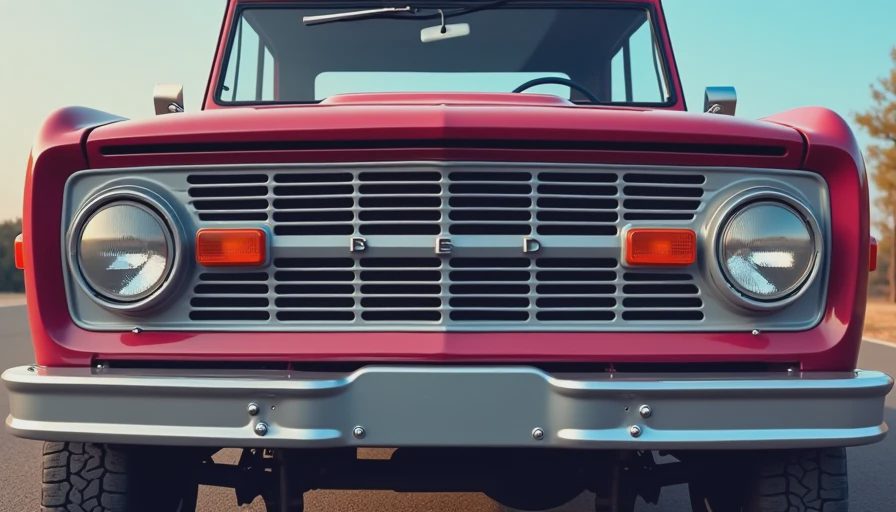
The 1978 model marked the beginning of Ford's second-generation full-size Bronco, built on a shortened F-Series truck platform. Compared with the earlier compact Bronco, it was larger, heavier, and more comfortable for highway travel. Its two-door layout, four-wheel drive, solid front axle, removable rear roof section, and truck-based construction explain why collectors and off-road buyers still track these vehicles.
Most examples used a V8, with engine configurations commonly associated with the 351M or 400 cubic-inch families. Exact equipment varies by build, drivetrain, and later modifications, so I would not trust an online listing that gives only an engine number without photos, casting information, or a vehicle identification number. A period automatic transmission is common, while manual examples are less frequently seen. The number that matters is not the factory horsepower estimate; it is whether the cooling system, transmission, transfer case, and axles work together under load.
By the Numbers:
- Era: 1978-1979 second-generation full-size Bronco
- Layout: Two-door, body-on-frame SUV with four-wheel drive
- Typical powertrain: Gasoline V8 and automatic transmission
- Biggest ownership variables: Rust, restoration quality, gearing, and fuel economy
- Modern comparison: Far less efficient and less safe than a current SUV, but dramatically simpler to repair

How much should a 78 bronco cost?
Price guides are useful for establishing a range, not for approving a purchase. In the current collector market, a rough project can sit below $15,000, while a usable driver often lands around $20,000 to $35,000. A professionally restored example can exceed $50,000, and exceptionally documented builds can go higher. These are planning ranges, not a valuation of any particular truck; rust, originality, title status, and workmanship can move the number by tens of thousands of dollars.
Start with a three-column budget. Put the purchase price in column one. Put immediate repairs in column two, including tires, brakes, cooling components, fuel lines, seals, and battery wiring. Reserve column three for the first 12 months: upholstery, weather stripping, suspension bushings, exhaust work, and electrical repairs. A $24,000 truck with $3,000 of known work is often smarter than a $19,000 truck that needs an uncertain frame repair. Ask for receipts rather than relying on phrases such as frame-off or turnkey.
Inspection points that change the calculation
Rust is the primary financial risk. Inspect the frame rails, body mounts, floor pans, inner fenders, tailgate area, wheel arches, and windshield surround. Fresh undercoating is not proof of rust prevention; it can also hide perforation or poorly finished patch panels. Bring a flashlight, a small magnet, and a paint-thickness gauge if you have one. Look underneath before discussing price.
Next, check drivetrain behavior. Cold-start the engine and observe oil pressure, exhaust smoke, idle quality, and temperature rise. Engage four-wheel drive on a suitable surface and listen for transfer-case noise. A clunk during acceleration can indicate worn driveshaft joints, differential backlash, or tired transmission mounts. Brake pull, steering wander, and uneven tire wear deserve separate repair estimates rather than one vague deduction.
Electrical work is another common budget leak. Test every gauge, exterior lamp, wiper setting, heater function, and accessory. Many restored trucks use aftermarket wiring, and a neat-looking fuse panel does not guarantee correct circuit protection. Photograph the VIN and title, then compare the identification number with the paperwork before leaving a deposit.
Living with a 78 bronco today
A 78 bronco is entertaining because it communicates more than a modern crossover. The upright seating, mechanical controls, engine noise, and open-air configuration create an experience that a new Ford Bronco cannot reproduce exactly. The tradeoff is measurable: older brakes, less sound insulation, no modern driver-assistance systems, and fuel consumption that can make a long commute expensive. A daily driver should also have reliable heating, functional defrosting, weather seals, and tires with appropriate load ratings.
For a weekend vehicle, I would prioritize a solid frame, predictable steering, and documented brake work over expensive paint. A fresh suspension lift may look impressive, but poor geometry can make the truck tiring and unsafe on pavement. Mild upgrades such as electronic ignition, improved cooling, power-assisted brakes, and better weather stripping can add usability without destroying its original character.
Insurance, financing, and ownership math
Insurance for a 78 bronco depends on how the truck is used and how its value is documented. A collector or classic policy may be appropriate when mileage is limited, the vehicle is stored securely, and an agreed value is established. A standard policy can make more sense for regular commuting or unrestricted use. Collision and comprehensive coverage are separate from liability: collision addresses covered damage from a crash, while comprehensive generally addresses risks such as theft, fire, vandalism, or weather.
Before choosing coverage, gather restoration receipts, photos, a current appraisal, and comparable listings. Ask whether modifications, towing, spare parts, and roadside assistance are included. Some classic policies have mileage, storage, or driver restrictions. The lowest premium is not automatically the best deal if the settlement value cannot support a proper repair after a loss.
Financing can be difficult because lenders often prefer newer vehicles with predictable book values. If you borrow $30,000 for five years at an illustrative 8% annual rate, the payment is roughly $608 per month before insurance, fuel, taxes, and maintenance. That rate is an example for planning, not a market quote. Cash reserves matter more here than on a newer SUV because one frame repair or transmission rebuild can exceed $4,000.
Alternatives and my buying recommendation
If the goal is low-risk transportation, skip the 78 bronco and compare a newer Ford Bronco, Jeep Wrangler, Toyota 4Runner, or used Chevrolet Tahoe. They offer better crash protection, easier parts sourcing, stronger climate control, and more predictable daily operation. If the goal is an analog weekend truck, compare the 78 bronco with a first-generation Toyota 4Runner, International Scout II, or early Chevrolet K5 Blazer. Each has its own rust and parts challenges, so inspect condition rather than assuming one badge is automatically superior.
On my five-part rubric, I score a solid driver at 8 for character, 7 for trail potential, 4 for efficiency, 3 for modern safety, and anywhere from 3 to 8 for value depending on documentation. That is a strong weekend-vehicle result and a weak commuter result. Three years ago, nobody predicted this. Here's the data that proves it: vintage SUV prices brought more buyers into the segment, but restoration costs also rose with labor and specialty parts.
My shopping sequence is simple. Set a total budget, inspect the frame, verify the title, test the drivetrain cold and hot, obtain an insurance quote before purchase, and keep at least $5,000 in reserve for a usable truck. The right 78 bronco is a memorable machine. The wrong one is a rolling list of deferred maintenance, and no amount of nostalgic marketing changes that math.
No comments yet.