Three years ago, nobody predicted this. Here's the data that proves it: the 2025 honda cr v fcev is less a mainstream SUV and more a rolling test of whether hydrogen can still carve out a niche in the U.S. market. For a young professional who shops with a spreadsheet, that makes it fascinating. It is not the kind of vehicle you buy because everyone else is buying it. You look at it because it solves one very specific problem set: limited refueling time, short daily drives, and a willingness to trade convenience in the broader market for something unusual and technically clean.
Honda's setup matters here. The CR-V name gives buyers a familiar crossover shape, but the fuel-cell hardware changes the ownership math. If you live near hydrogen stations, the idea starts to make sense. If you do not, it becomes a math problem with too many red cells in the column for access. That is why this review is not about hype. It is about whether the vehicle fits real life, real roads, and real budgets.
Why the 2025 honda cr v fcev is not a normal commuter SUV
The first thing to understand is that this is not a standard CR-V with a different badge. It is built around a fuel-cell system with a plug-in battery, which means the vehicle can handle a short battery-only commute and then lean on hydrogen for the longer haul. That makes it more flexible than a pure fuel-cell sedan and more interesting than a conventional hybrid. It also makes it more complicated to own.
For most shoppers, the important question is not whether the technology is clever. It is whether the technology fits the route you already drive. If your week is office, grocery store, gym, and daycare, the short electric range is useful. If your life involves cross-state trips and random detours, the hydrogen network becomes the limiting factor. In other words, this is not a car for every garage. It is a car for a very narrow garage.
Honda is clearly aiming at early adopters, not the mass market. That is the correct move. Niche technology should not pretend to be universal. The mistake would be assuming the badge alone makes this one easy to recommend.
By the Numbers: 2025 honda cr v fcev range, fueling, and lease math
By the Numbers: Honda's published figures point to about 29 miles of battery-only driving and roughly 270 miles of total range. That split tells you almost everything you need to know. The battery is for convenience, not for replacing the fueling system. The hydrogen tank is what gives the SUV its travel range, and the plug is there to make short trips cheaper and cleaner when you can charge at home or at work.
That structure creates a very specific use case. If your commute is under 20 miles round-trip, the battery portion does real work. If you make a longer drive once or twice a week, the fuel-cell side keeps the vehicle from feeling boxed in. If you are looking for a true one-stop fill-up experience, hydrogen is fast, but the station map still matters more than the speed of the fill.
The lease-only angle also shapes the financial picture. For niche technology, leasing can be the rational play because it limits your exposure to resale uncertainty and future repair complexity. That is especially true when the market is small and the buyer pool is thin.
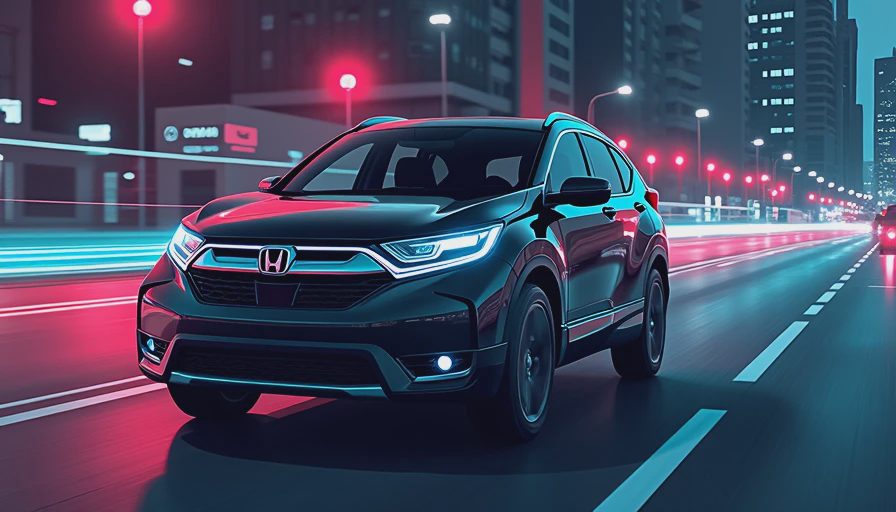
What charging and hydrogen access look like in the real world
This is where the spreadsheet gets real. A fuel-cell vehicle sounds futuristic until you plot the stations. In the U.S., hydrogen retail access is concentrated in California, with a far thinner footprint anywhere else. That means the 2025 honda cr v fcev is really a California conversation, not a national one. A few extra miles of range do not solve a dead-end station map.
Home charging helps, but only on the battery side of the equation. That is still valuable, because a driver can handle errands and short commutes without visiting a station every day. But the vehicle is not a substitute for a network that exists everywhere. The practical rule is simple: if hydrogen is not available on your normal routes, this SUV becomes a science project.
That is not a knock on the engineering. It is a reminder that infrastructure always beats spec sheets. A polished drivetrain does not matter if the nearest viable station is out of the way and you need to build your week around it.
Insurance, repairs, and the ownership side nobody markets
For a shopper comparing the 2025 honda cr v fcev to a battery EV, the insurance question is more about repair access than drivetrain drama. Niche vehicles can create higher friction in claims simply because the parts pipeline and repair network are smaller. That does not automatically mean massive premiums, but it does mean you should shop carefully across carriers and not assume every quote will land in the same ballpark.
A sensible move is to compare comprehensive and collision deductibles at the same time you compare monthly premium. On a low-volume vehicle, a lower deductible can be worth the extra premium if it reduces the sting of glass, sensor, or bumper repairs. If your quote jumps because the vehicle is listed as uncommon or expensive to repair, ask the agent whether that reflects parts scarcity, labor assumptions, or both. Those are different problems, and they are not priced the same.
Maintenance is another quiet advantage. Electric drive components remove some of the wear items that traditional gasoline buyers budget for. But the upside is only useful if the support network is there when something specific fails.

How it stacks up against a BEV or a hybrid
If you compare this vehicle with a battery EV, the win is refueling speed and the ability to keep some long-trip flexibility without waiting on a DC fast charger. If you compare it with a hybrid, the win is lower tailpipe emissions in use and a more futuristic ownership story. The tradeoff is obvious in both directions. A BEV gives you a much bigger public-charging ecosystem and more model choice. A hybrid gives you nationwide fuel access and a simpler shopping process.
That is why I would not put this in the same bucket as a Toyota RAV4 Hybrid or a Tesla Model Y. Those vehicles fight for mainstream buyers. This one fights for a buyer who wants to live at the edge of the market without getting stranded there. On the CaliperScore rubric, that is a very different scorecard. Convenience gets dinged. Novelty and technical ambition score well. Everyday freedom lands somewhere in the middle.
For the right buyer, that mix is enough. For everyone else, the standard hybrid or a well-specced EV will be the smarter spreadsheet answer.
Who should actually put this on a shortlist
If you live in California, have realistic access to hydrogen, and like the idea of a crossover that behaves partly like an EV and partly like a fast-fill alternative-fuel vehicle, the 2025 honda cr v fcev deserves a test look. If your driving patterns are predictable and local, the package is compelling. If your routes are messy, your trips are long, or you want the broadest resale market possible, this is probably not your best deal.
That is my blunt read. The 2025 honda cr v fcev is not trying to be everything to everyone. It is trying to prove that hydrogen still has a place in a modern garage. For the handful of buyers who can use it properly, that makes it interesting. For the rest, it is a reminder that the best vehicle on paper is not always the best one in your zip code.
No comments yet.