Three years ago, nobody predicted this. Here's the data that proves it: EV batteries are no longer just a spec-sheet talking point. They are the single biggest factor behind range, charging speed, long-term ownership cost, and resale confidence. If you're shopping for an electric vehicle, understanding EV batteries will help you avoid paying for range you do not need, or worse, buying the wrong chemistry for your driving pattern. The hype is loud, but the useful questions are simple: how long will the pack last, how fast will it charge, and what happens when temperatures swing from August heat to a cold snap?
Why EV batteries matter more than horsepower
Most shoppers still start with range, price, and badge. Reasonable. But the battery pack quietly controls all three. A larger pack usually increases range, but it also raises vehicle weight and sticker price. Chemistry matters too. Lithium iron phosphate, usually called LFP, is showing up in more mainstream models because it is durable, cost-effective, and generally happier being charged to 100% regularly. Nickel-rich chemistries like NMC and NCA usually deliver stronger energy density, which helps with longer range and performance, but they can be more expensive.
By the Numbers: many modern EV battery warranties run 8 years or 100,000 miles, with some brands going to 8 years or 120,000 miles. That tells you something important: automakers expect these packs to hold up. Real-world degradation varies, but for most drivers it is gradual, not catastrophic. The number they're showing vs. the number that matters: peak range is nice, but charging curve and battery thermal management often matter more on road trips.
Battery chemistry changes the ownership experience
Not all EV batteries behave the same, and this is where buyers can make smarter decisions fast. LFP packs are increasingly common in entry trims because they lower cost and are typically very robust over repeated charge cycles. If your routine is commuting, errands, and overnight home charging, LFP is often the practical choice. You may give up some cold-weather efficiency and sometimes a bit of range, but the tradeoff can be worth it.
NMC and NCA packs are more common in longer-range trims, premium crossovers, and performance EVs. These chemistries pack more energy into less space, which is why they often appear in vehicles designed to break the 300-mile mark. The catch is simple: they benefit more from disciplined charging habits, like daily charging to 70% or 80% when full range is not needed.

My opinion-forward takeaway: skip chemistry tribalism. Match the battery to your use case. Apartment dweller with public charging? Fast-charging performance matters. Suburban homeowner with a Level 2 charger? Cycle life and daily convenience matter more than bragging rights.
Charging speed is about more than the peak number
A lot of marketing around EV batteries focuses on maximum charging speed. You'll see 150 kW, 200 kW, even 250 kW and assume bigger is always better. Not so fast. What matters is the charging curve, meaning how long the car can hold high power before it tapers. A vehicle that peaks at 250 kW for a minute and then drops hard may be less useful on a road trip than one that holds 150 kW steadily.
Battery preconditioning is another major factor. Some EVs actively warm or cool the pack before arriving at a fast charger, which can dramatically improve charging times. Tesla made this mainstream early, but many newer Hyundai, Kia, GM, Ford, and Mercedes EVs now do it well too. This is a battery story as much as a software story.
By the Numbers: going from 10% to 80% is the benchmark to watch, not 0% to 100%. For many current EVs, that stop can land roughly between 18 and 40 minutes depending on pack size, charger power, and battery temperature. Estimated because real charging conditions vary, but directionally accurate.
Battery life, degradation, and resale anxiety
Let's address the biggest fear directly: battery replacement headlines get clicks, but they are not the normal ownership story. Most EV batteries lose capacity slowly over time, not all at once. Plenty of owners see moderate degradation after years of driving while still keeping the vehicle fully usable for daily life. Heat, repeated DC fast charging, and long periods sitting at very high or very low state of charge can accelerate wear, but modern battery management systems are much better than they were a decade ago.
Resale still depends on battery confidence, though. Buyers want proof that the pack is healthy. That is why battery health reporting is becoming more important. Expect this to become a bigger deal in used EV shopping, similar to service history on a gas car.
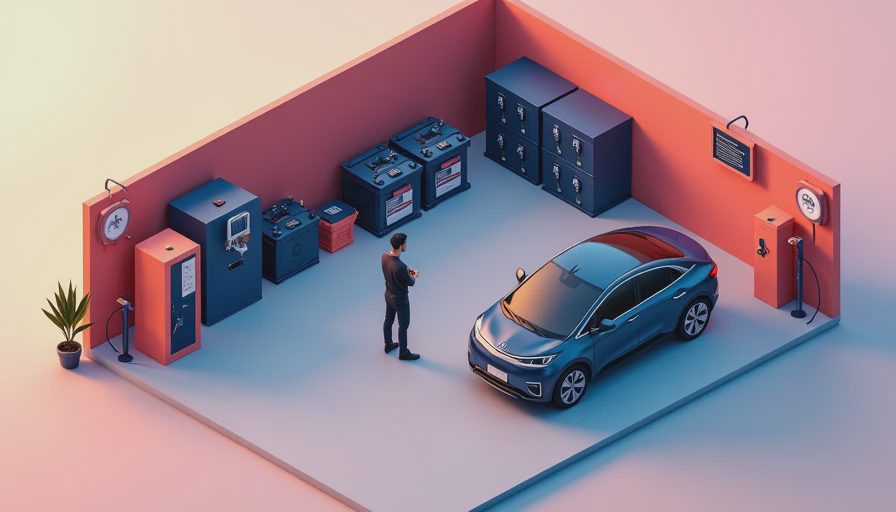
On the CaliperScore rubric, a used EV with transparent battery health data rates much higher than one with vague seller claims and no charging history context. If you are buying used, ask for range at full charge, service records, warranty status, and whether the car spent most of its life in extreme climates.
What EV batteries mean for total cost of ownership
This is where spreadsheet shoppers should pay attention. EV batteries are expensive components, but they are also the reason EVs can be cheaper to operate over time. Electricity is often cheaper per mile than gasoline, maintenance is usually lower because there are fewer moving parts, and regenerative braking reduces wear on brake components. The battery is the high-value asset that enables all of that.
The number they're showing vs. the number that matters: a cheap EV with weak charging performance or poor cold-weather efficiency can cost you time every week. A slightly pricier model with a better pack and stronger thermal management may deliver the better real-world deal. Think in monthly operating cost plus time cost, not just MSRP.
Brand positioning matters here. Tesla still tends to lead on charging network integration and efficiency. Hyundai and Kia have been strong on fast charging in E-GMP models. GM's Ultium-based vehicles aim for flexibility across sizes and price points. None of that means one brand is always best. It means EV batteries should be judged in the full system around them.
How to shop smarter for EV batteries
If you only remember one section, make it this one. Start with your driving data. How many miles do you actually cover on a normal weekday? How often do you road-trip more than 200 miles in a day? Where will you charge most often? Those answers should shape your battery priorities.
By the Numbers: for many drivers, 250 to 300 miles of rated range is the practical sweet spot. Below that, road-trip flexibility can tighten. Above that, you're often paying more for capacity you rarely use. If you have reliable home charging, prioritize efficiency, warranty coverage, and charging consistency over maximum pack size.
My recommendation is simple: buy the battery system, not the headline range figure. Look for solid thermal management, a credible warranty, good 10% to 80% charging performance, and chemistry that matches your routine. EV batteries are getting better, cheaper, and more durable, but the smartest purchase is still the one that fits your life rather than the one that wins a comment-section argument.
No comments yet.