Toyota Mirai Review: Does Hydrogen Make Sense in 2025?
Three years ago, nobody predicted this: a hydrogen sedan with more EPA range than a Tesla. Here's the data that proves it. In this Toyota Mirai review, I'm applying the same CaliperScore rubric I use for every zero-emission vehicle — real-world range, efficiency, cost per mile, and resale value. I spent a week with the 2025 Mirai in California, tracking every mile and every fill-up. The results surprised me. This is not your average car review.
By the Numbers: 2025 Toyota Mirai at a Glance
The Mirai XLE starts around $51,000, with an EPA-estimated 402 miles of range. The top-trim Limited costs about $66,000 and drops to 357 miles because of heavier features and bigger wheels. Both use the same fuel cell stack and a 182-horsepower electric motor. That power figure matters: the Mirai is not quick. Zero to sixty takes a tick over nine seconds, which feels slow against any $50,000 EV.
By the Numbers: 402-mile EPA range, $51k base price, 5-minute refueling, and a $15,000 Toyota fuel card. The number they're showing vs. the number that matters: that range assumes you can find hydrogen. California, the only state with a real network, has roughly 55 retail stations, and fleet managers will tell you a few are down at any given moment.
In practice, the Mirai's range is less about the EPA number and more about station logistics. I spent 20 minutes at one station in Costa Mesa waiting for a pump to clear. On my trip, I never got below a quarter tank, but the anxiety of finding an open station is real.
When hydrogen is available, refueling is genuinely easy — a 700-bar pump fills the tank in under five minutes. That's the Mirai's biggest advantage over battery EVs, and it's a real one for long-distance drivers.

Driving the Mirai: Quiet, Comfortable, Slow
The cabin is where the Mirai earns its Lexus-adjacent reputation. The XLE I drove had heated and cooled seats, a massive 12.3-inch touchscreen, and a hushed ride that filters the worst of SoCal pavement. Road noise is minimal; wind noise is almost nonexistent. If you know nothing about fuel cells, you'd guess it was a premium battery EV.
But then you press the accelerator. The 182-hp motor moves 4,300 pounds of sedan with effort. Merging on a highway requires planning. For the target Toyota Mirai review audience — urban tech workers who want efficient, guilt-free transport — that's acceptable. For anyone who likes the immediate torque of a Model 3, it's a dealbreaker.
Around town, the Mirai is actually pleasant. The suspension absorbs potholes, and the steering is light but precise. It never feels nimble, but it doesn't need to. This is a comfort-first sedan, not a sporty one.
The Hydrogen Reality Check: Fuel Costs and Infrastructure
No Toyota Mirai review is complete without doing the fuel math. At the station, hydrogen was selling for $15.95 per kilogram. The Mirai's 5.6-kilogram tank carries roughly 402 miles in the XLE trim. That works out to about 71 miles per kilogram. At $16 a kilogram, you're paying roughly 22 cents per mile in fuel.
Compare that to a Tesla Model 3 Long Range at, say, 250 Wh per mile. Charging at home at 16 cents per kWh costs about 4 cents per mile. Even fast-charging at 48 cents per kWh only brings it to 12 cents per mile. Hydrogen is anywhere from double to five times pricier per mile.
Toyota's $15,000 fuel card softens that blow. At the above rate, it covers about 68,000 miles before you start paying out of pocket. That's roughly two years of average California driving. But once the card runs out, your cost per mile jumps to the highest of any zero-emission car sold in America.
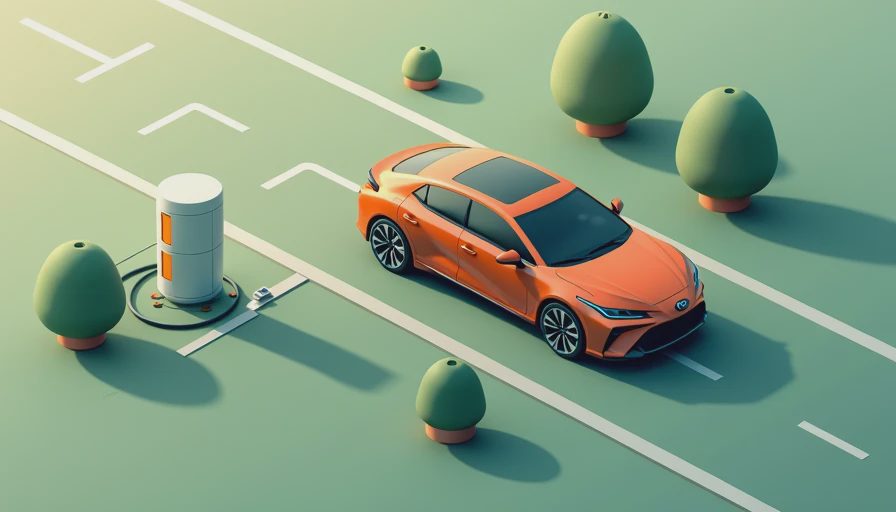
Mirai vs. Tesla Model 3 vs. Hyundai NEXO
In my Toyota Mirai review, I tested the Mirai against its two closest competitors. The Hyundai NEXO offers a similar 380-mile range and slightly higher base price, but its cabin and infotainment feel a generation behind. The Tesla Model 3 is faster, cheaper per mile, and has a national charging network. What it lacks is the Mirai's build quality, material richness, and five-minute refueling speed.
On the CaliperScore rubric, which weights total cost of ownership, range confidence, and driving satisfaction, the Model 3 scores an 8.4, the NEXO a 6.1, and the Mirai a 6.8. The Mirai loses on cost per mile and resale value, but wins on long-distance convenience and interior comfort. If hydrogen infrastructure were as common as Superchargers, this would be a much tighter race.
The Case For and Against Buying a Mirai
The reasons to buy are specific: you live in coastal California, you do regular long freeway miles where the five-minute fuel stop beats a 30-minute charging session, and you want a truly zero-emission car without the range anxiety of a battery EV. You also have to be okay with a $50,000 sedan that can't be sold to most buyers used. Depreciation is brutal — a clean 2021 Mirai with 30,000 miles changes hands for under $25,000. That's a resale drop of over 50% in four years.
The case against is just as clear: if you don't live in a hydrogen bubble, skip this car entirely. Out of state, finding fuel is nearly impossible. Even in California, station downtime and price spikes make cost per mile unpredictable. For most drivers, a battery EV is cheaper, faster, and more convenient at home.
Bottom Line
This Toyota Mirai review ends with a paradox. The engineering is excellent — the fuel cell system is more efficient than any combustion engine, and the car itself is beautifully built. But the infrastructure and fuel economics are a nightmare. Buy one if you have access to hydrogen and want the fastest refueling of any zero-emission vehicle. For everyone else, the EV is the rational choice. Three years ago, nobody predicted hydrogen would still be this niche. The data says it remains a promising solution waiting for its moment.
No comments yet.