Tesla Model X doors are the rare EV feature that can make a spreadsheet shopper smile and a body-shop manager sweat. For a family or a commuter choosing between a Model Y, Rivian R1S, Kia EV9, or the X, the doors are not just theater. They affect parking ease, curbside loading, repair risk, and how annoying the car feels in a tight garage. By the Numbers: I treat them as a premium convenience feature, but also as a premium complexity feature. If you buy the X for the cabin and range, good. If you buy it for the doors alone, you should know exactly what you are signing up for.
How Tesla Model X doors work
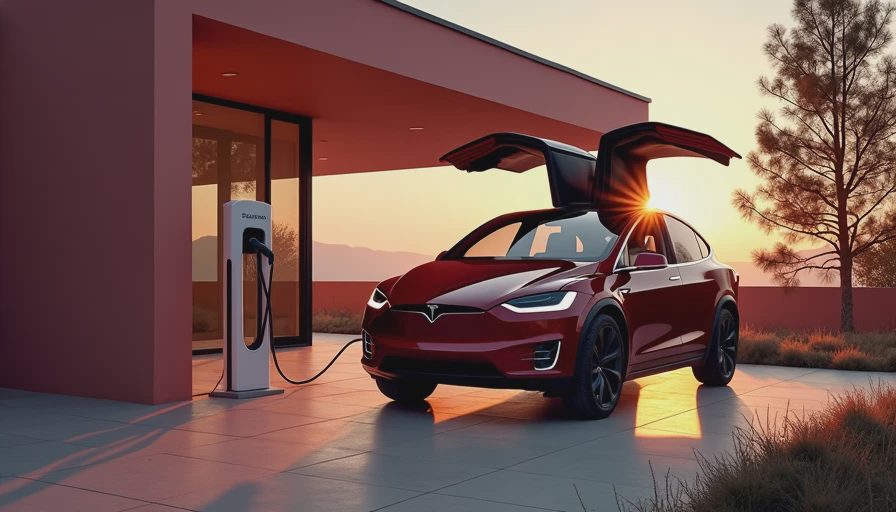
The idea behind Tesla Model X doors is more practical than the name sounds. The rear doors use a double-hinged design so they can swing up and outward instead of just out. That matters because the motion is supposed to reduce the side clearance needed in a narrow parking space. The front doors are conventional, so the drama is all in back. Tesla uses sensors to watch for overhead obstacles, and in everyday use it usually feels smooth when the space is open enough. The catch is simple: the system is smart, not magical. If the ceiling is low, the garage is crowded, or a roof box is hanging over the car, the doors slow down or stop.
What I like about the setup is that it solves a real packaging problem. A three-row SUV with huge rear doors can be a pain in the second row because the side swing eats space. The taller opening helps with buckling a child seat, sliding in a bag, or getting a driver through without doing a weird sideways shimmy. The mechanism is still complex, though, and complexity is the thing that tends to show up later in ownership.
Where they make daily life easier
Tesla Model X doors earn their keep when you are loading kids, child seats, groceries, or a coworker in business clothes who does not want to duck under a low roofline. In rain, the upward motion can also help keep the opening more protected than a standard rear door. If you park in a suburban garage with decent height, the difference is real. You can stand closer to the opening and still have room to load bags without banging the door edge into another car. On a busy Saturday, that tiny bit of extra breathing room feels bigger than it sounds on paper.
The best use case is a driver who values access more than simplicity. If your routine includes school drop-off, weekly Costco runs, or a second-row child seat that gets used every day, the design starts to make sense fast. The taller swing path is also easier on your back than crouching into a low rear opening, especially when a seat is already occupied. The bigger the person and the bulkier the cargo, the more the layout feels like an actual ergonomic choice instead of a gimmick.

Where the novelty turns into a hassle
Tesla Model X doors are less charming in the places EV owners actually spend time: tight apartment garages, old office decks, and crowded grocery-store rows. The biggest annoyance is not the rear opening itself. It is the moment you realize the car needs both vertical space and patience. In a cramped spot, you may spend a few seconds waiting for the sensors to decide whether they trust the ceiling, a beam, or the SUV parked beside you. That is fine if you use the car like a luxury appliance and you are not in a rush. It is less fine if you are trying to drop off a passenger and pull out again in under a minute.
Snow and ice add another layer of friction, because any obstruction on the upper edges makes the system feel more cautious. Even light slush can turn a graceful motion into a slower one. I would also flag windy conditions, not because the doors are unsafe, but because you are suddenly more aware of how much moving hardware you are asking the car to manage. The feature still works, but the emotional math changes once you live with it every day instead of admiring it in a showroom.
What to inspect on a used Model X
On a used example, Tesla Model X doors deserve the same attention you would give the battery, tires, and suspension. Open and close both sides several times. Listen for uneven motor noise, watch for slow movement, and check whether the doors align cleanly when shut. Look for soft trim damage near the upper edge, because repeated parking-lot contact can leave marks that are easy to miss in photos. If you are shopping remotely, ask for a video of the doors moving in a normal garage, not just a sunny driveway. That matters because a system that works perfectly in open air can feel different when it is boxed in by walls.
I also want to know whether the seller has any record of calibration work, sensor issues, or body repairs. A clean-looking car can still have a history of fiddling around the doors after a minor bump. That does not automatically kill the deal, but it should change your price target. If the rest of the car is strong, I would rather pay for documented maintenance than inherit a mystery repair and hope for the best later.
Costs, repairs, and insurance reality
From an ownership standpoint, Tesla Model X doors are where the dream of low-maintenance EV life gets complicated. A normal rear door dent is one thing. A sensor issue, hinge problem, or motor problem is another. Even when the fix is straightforward, parts and labor can push the bill into the four-figure range, especially at a Tesla-focused repair shop or a body shop that is still learning the platform. That is not a scare tactic. It is just what happens when a vehicle uses more hardware and calibration than the average SUV.
Insurance companies do not care that the feature looks cool; they care that repairs can take longer and cost more than a simple stamped-steel door. That can show up in collision pricing and in how quickly a claim gets settled. If you are comparing quotes, ask how the carrier handles repair parts, glass, and body-shop choice before you assume the fancy door is just a styling upgrade. For a buyer who wants a cleaner total-cost picture, this is the line item that deserves a real conversation before purchase.
The comparison that matters before you buy
By the Numbers, the Model X is not competing with every SUV on the market. It is competing with the easier-to-live-with options in the same money band. A Model Y is simpler, cheaper, and less dramatic. A Rivian R1S and Kia EV9 give you a three-row layout without the same rear-door theater, which matters if you want less complexity and more predictable body-shop work. The Model X still has a strong case if you care about the cabin, acceleration, and the unique access it gives the second row. But if your daily routine is mostly parking garages, curbside pickups, and crowded city blocks, the simpler designs can be the better spreadsheet answer.
My take is blunt. If the rest of the Model X fits your life, the door design can be a real quality-of-life win. If you live in an older garage, park on the street most days, or want the least complicated EV you can buy, the feature is not enough to carry the whole purchase. I would test the doors in your actual parking spot before signing anything. Three years ago, nobody predicted this. Here's the data that proves it: the wow factor is real, but the fit check matters more.
No comments yet.