The 66 dodge monaco is not a compact collector car that disappears into a weekend garage. It is a large, chrome-heavy American full-size with a long hood, substantial curb weight, and the kind of road presence modern sedans cannot easily reproduce. The important question in 2025 is not whether this Dodge looks cool. It does. The question is whether its purchase price, fuel demand, maintenance profile, and insurance costs fit your actual driving plan.
My short answer: buy one as a hobby car, occasional cruiser, or historically interesting second vehicle. Do not buy a 66 dodge monaco expecting modern efficiency, easy parts availability, or painless urban parking. The spreadsheet gets more interesting when you separate emotional value from transportation value.
What the 1966 Monaco actually represents
Dodge positioned the Monaco above its regular full-size models for the 1966 model year. Buyers could find sedan, hardtop, and wagon body styles, depending on configuration, with the hardtop versions delivering the cleanest pillarless look. This was the era when a full-size car could be wider than a present-day midsize SUV and still be marketed as normal family transportation.
Engine availability varied by body style and equipment, so a buyer should verify the fender tag, broadcast sheet, and engine casting rather than trusting a seller's description. The commonly discussed V8 choices include Chrysler's 383-cubic-inch big-block, while larger-displacement options were available in the full-size Dodge range. A specific car's VIN and build documentation matter more than an online parts listing.
By the Numbers:
- Model year: 1966
- Brand: Dodge
- Vehicle class: Full-size American car
- Common engine discussion: 383-cubic-inch V8
- Fuel: Regular gasoline, with consumption dependent on engine, gearing, and tune
- Safety baseline: No modern airbags, electronic stability control, or anti-lock brakes
The number they're showing versus the number that matters: a seller may advertise horsepower, but rust condition, transmission behavior, and brake-system integrity determine whether the car is usable. A shiny engine bay does not compensate for weak floor pans.
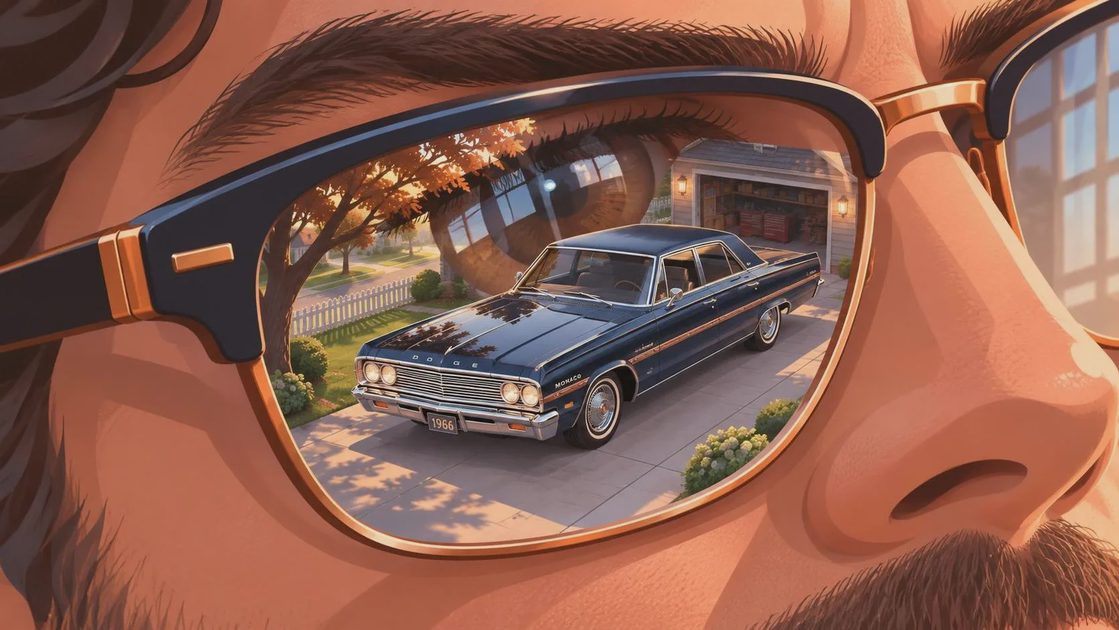
Driving a 66 dodge monaco in today's traffic
A 66 dodge monaco can feel relaxed at 55 mph and surprisingly substantial on a highway ramp. Its long wheelbase generally supports a smooth ride, but the driving experience is shaped by old-school steering, drum-brake behavior on many examples, and suspension components that may be decades old. Even a correctly restored car will not stop, turn, or protect occupants like a current Toyota Camry, Ford Mustang Mach-E, or Honda Accord.
That comparison is not an insult. It is the buying filter. If your commute includes dense Austin traffic, narrow parking garages, or frequent emergency braking, the Dodge creates daily friction. If your use case is a Sunday drive, local cars-and-coffee event, or occasional road trip on secondary highways, the same dimensions become part of the appeal.
I would score the driving experience 7 out of 10 for character, 4 out of 10 for maneuverability, and 2 out of 10 for modern safety equipment. Those are subjective CaliperScore ratings, not factory measurements. The car earns points through sound, visibility over the hood, and mechanical simplicity. It loses them through stopping distance, fuel consumption, and limited crash protection.
Before driving, inspect tire age, steering play, brake-pedal feel, coolant temperature, and transmission engagement. A replacement tire with excellent tread can still be unsafe if its date code is old. A test drive should include cold startup, low-speed turns, moderate braking, and a highway-speed check when legal and safe.
Buying checklist and realistic ownership costs
A project 66 dodge monaco can appear affordable at first glance. A rough, incomplete sedan might trade for several thousand dollars, while a documented, rust-free, professionally restored hardtop can reach much higher figures. Those are broad market estimates, not a current appraisal; regional demand, originality, body style, and documentation can move the price dramatically.
Budget in layers. Initial inspection and transport can cost $300 to $1,500. A basic brake, fuel, and cooling-system refresh might consume $1,000 to $4,000 in parts and labor. Rust repair, upholstery, trim, glass, and paint can quickly add $10,000 or more. A clean purchase at $15,000 can therefore become a $25,000 project before the first major cosmetic upgrade.
Use this inspection sequence:
- Confirm the VIN and title match the car and seller's paperwork.
- Lift the carpets and inspect floor pans, rocker panels, trunk corners, and windshield channels.
- Check for mixed body panels, uneven gaps, bubbling paint, and fresh undercoating.
- Verify that the engine number, carburetor, transmission, and rear axle suit the claimed configuration.
- Test every switch, gauge, light, window, and heater function.
- Get a written estimate from a shop experienced with vintage American vehicles.
The 66 dodge monaco rewards documentation. Receipts, factory tags, restoration photographs, and a coherent ownership history often matter more than a seller's statement that the car is “rare.”
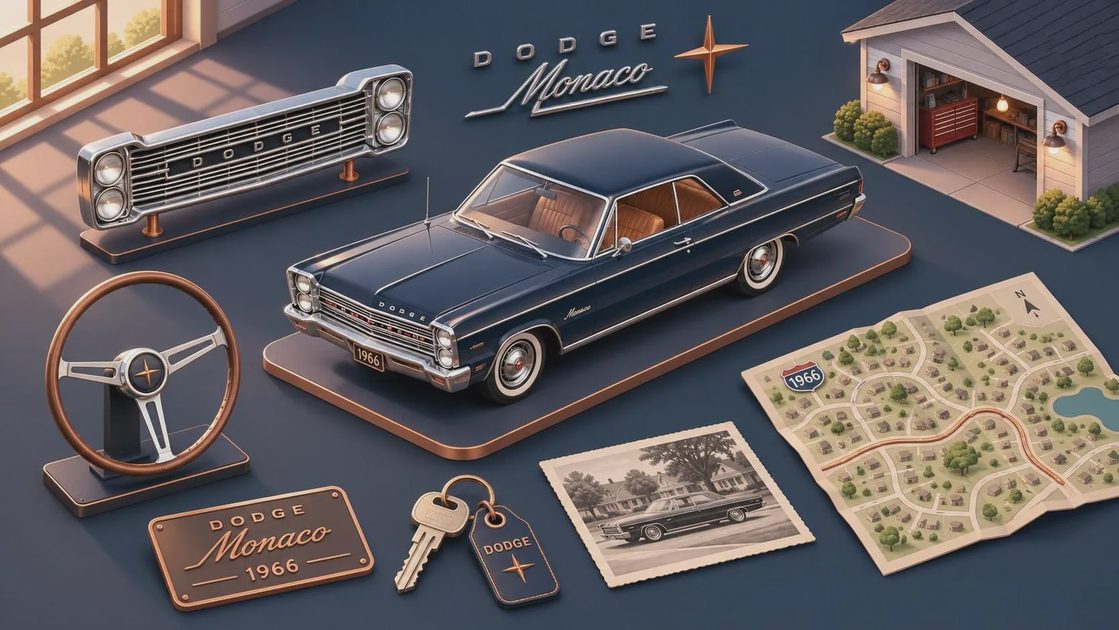
Fuel, maintenance, and insurance math
Fuel is the most obvious ownership penalty. A large V8 full-size car can return economy far below a modern hybrid, and actual results depend on displacement, gearing, carburetor tuning, tire pressure, and driving style. If the car achieves an estimated 12 miles per gallon and travels 2,000 miles annually, it uses about 167 gallons. At $3.50 per gallon, that is roughly $585 per year. This estimate is illustrative, not a measured claim for every car.
Maintenance is less predictable than fuel. Oil changes, belts, hoses, ignition components, cooling-system service, and brake work are manageable. Interior trim, model-specific chrome, windshield glass, and rust repair are the budget hazards. Set aside $1,000 to $3,000 annually for a driven example, then keep a separate emergency reserve for transmission or body repairs.
Insurance can be cheaper than a modern daily driver when the car qualifies for a collector policy, but usage rules matter. Collector policies often limit annual mileage, require secure storage, and exclude commuting. Standard policies may provide more flexible use but can value the vehicle differently after a total loss. Ask whether the policy uses agreed value, stated value, or actual cash value, and photograph the car plus its documentation before binding coverage.
The 66 dodge monaco also deserves liability limits that match your broader financial exposure. Saving $100 on an annual premium is not a strong trade if your liability protection is inadequate. Compare quotes from companies that write classic vehicles, and disclose modifications such as engine swaps, upgraded disc brakes, aftermarket air conditioning, or custom wheels.
How it compares with a modern second car
Against a used compact hybrid, the 66 dodge monaco loses on almost every measurable operating metric: fuel consumption, parking footprint, parts convenience, emissions equipment, braking assistance, and daily reliability. Against a modern performance car, it may lose acceleration while winning on visual impact and analog character. That is why a direct miles-per-dollar comparison misses the point.
For a young professional shopping with a spreadsheet, classify it as a discretionary asset rather than transportation. Keep a dependable daily driver for work, airport trips, and bad-weather commuting. Use the Dodge for planned drives where a roadside repair, slower pace, or parking search will not ruin the day. This two-car strategy reduces pressure to modernize a car that was never designed for modern routines.
My CaliperScore ownership rubric lands at 6.1 out of 10: 9 for presence, 7 for mechanical accessibility, 5 for parts availability, 3 for operating efficiency, and 2 for safety technology. The overall number is not a rejection. It says the right buyer values experience enough to accept measurable inconvenience.
Final buying recommendation
Buy a 66 dodge monaco when the body is solid, the paperwork is credible, and the price leaves room for repairs. Walk away from a cheap car with structural rust, missing trim, unclear title history, or an overheating engine unless you have a restoration budget and specialist support. Condition beats badge, and documented originality beats a vague claim of rarity.
Three years ago, nobody predicted this. Here's the data that proves it: the appeal of vintage full-size cars is not based on efficiency; it is based on scarcity, design, and a driving experience that current vehicles intentionally filter out. A 66 dodge monaco can deliver that experience, but only when you buy the example instead of the fantasy. Get a pre-purchase inspection, compare collector insurance quotes, and make the numbers work before the chrome wins the argument.
No comments yet.