The short answer from my spreadsheet is encouraging: Subaru remains a sensible long-term buy, but the badge alone does not guarantee low repair costs. The Subaru reliability ratings 2025 picture is uneven across models, powertrains, and ownership years. The Impreza and Legacy look stronger on value, while newer technology in models such as the Solterra introduces more variables. If you are shopping with a five-year ownership horizon, model selection matters more than brand reputation.
I am using a consistent rubric here: predicted dependability, warranty coverage, recall exposure, powertrain complexity, maintenance cost, and real-world owner experience. Some figures below come from published vehicle data, while forward-looking scores are my estimates rather than official manufacturer claims. Subaru does not publish one universal reliability score, so treat this as an analysis framework, not a factory promise.
By the Numbers: The 2025 Subaru Reliability Snapshot
The 2025 Subaru lineup is relatively conservative. Most gasoline models use familiar four-cylinder engines, continuously variable transmissions, and standard all-wheel drive. That reduces drivetrain variation, but it also means a major transmission or head-gasket-related repair can be expensive outside warranty.
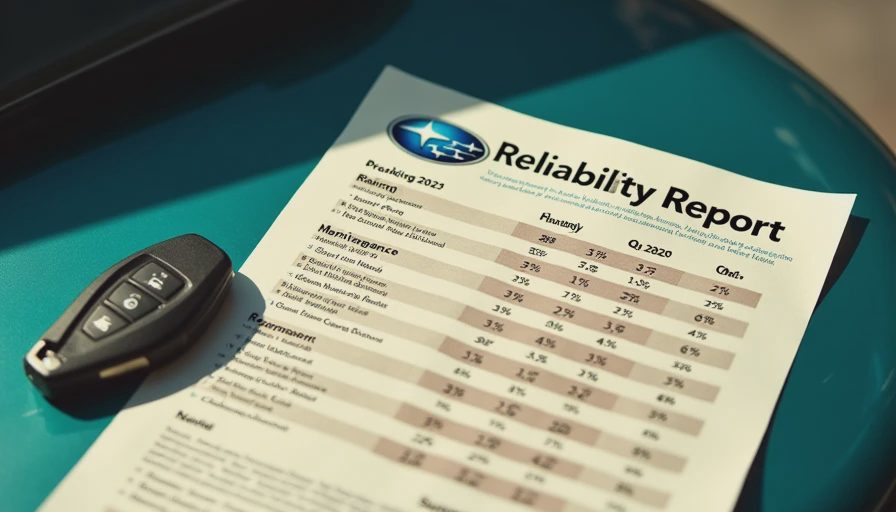
My estimated reliability range for the mainstream 2025 models is 7.5 to 8.3 out of 10. The Impreza sits near the top because it is mechanically straightforward and has a lower entry price. The Crosstrek scores close behind because it shares much of that architecture but adds more crossover equipment. The Forester is a strong practical choice, although its larger cabin and available turbocharged engine in some recent generations can increase repair complexity.
By contrast, the Solterra deserves a separate line on the chart. Its electric powertrain has fewer oil-change and exhaust-system components, but battery, charging, and software issues can produce high repair bills when they occur. Subaru's EV warranty coverage is important here, especially for buyers planning to keep the vehicle beyond the basic warranty period.
Model-by-Model Reliability Analysis
The 2025 Impreza is my reliability value pick. Its 2.0-liter four-cylinder engine is not quick, but the modest output reduces stress on the drivetrain. A buyer who drives 12,000 miles annually and follows the maintenance schedule can reasonably budget roughly $500 to $800 per year for routine service, excluding tires, collision repairs, and unexpected failures. That is an estimate based on typical compact-car service pricing, not a quoted Subaru schedule.
The Crosstrek adds ground clearance and a more useful cargo shape without becoming mechanically exotic. Its biggest ownership advantage is versatility: one vehicle can handle commuting, snow, and light trail access. The 2025 Forester is also a strong family choice, with excellent visibility and a roomy cabin. However, higher trim prices mean higher replacement costs for wheels, sensors, and driver-assistance hardware after a crash.
The Outback offers the most road-trip utility, but it is not automatically the most reliable Subaru. More equipment means more potential failure points, and the available turbocharged engine increases performance while adding complexity. The Legacy is less fashionable, yet its sedan layout and established components make it an underrated used-car reliability candidate.
The Solterra's rating is more conditional. Battery degradation is not the same as engine wear, and software updates can solve problems that would have required mechanical repairs in a gasoline vehicle. Still, charging access, cold-weather range, and dealer service capability should be part of the ownership calculation.
What the Subaru Reliability Ratings 2025 Miss
Any reliability chart has blind spots. A three-year predicted score cannot fully describe a vehicle at 120,000 miles. It also cannot tell you whether a local dealer diagnoses problems efficiently or whether a previous owner skipped maintenance. A used Subaru with complete service records may be a safer bet than a neglected example with a higher original rating.
The number they are showing versus the number that matters is often the difference between a component failure and the cost of resolving it. A $150 sensor is irritating. A $4,000 transmission repair changes the ownership budget. Subaru's standard all-wheel-drive layout can improve traction, but replacing four tires at once is often important because mismatched tread depths can place extra stress on the drivetrain. A full set may cost $600 to $1,000 depending on size and brand.
This is also where insurance enters the model. Comprehensive and collision coverage pay for different types of damage, and neither is a substitute for mechanical breakdown coverage. If you finance a newer Forester, lender-required coverage can make the monthly budget materially higher than the payment alone. Compare insurance quotes using the exact trim and ZIP code before signing a purchase order.
Maintenance Costs and Warranty Reality
Subaru's new-vehicle limited warranty is commonly structured around three years or 36,000 miles, while the powertrain warranty commonly runs five years or 60,000 miles. Confirm the current terms, exclusions, and transfer rules for the exact vehicle because coverage details can change. Routine maintenance is generally not included, so oil, filters, brake work, tires, and alignment remain owner expenses.
A realistic maintenance reserve for a new Subaru is about $600 to $1,000 annually after the first service period, depending on mileage and regional labor rates. Setting aside $75 per month is a practical starting point for a commuter. At 60,000 miles, budget for more substantial service, including fluids, inspections, and possibly brake components. Skipping scheduled work to save $200 today can create a much larger bill later.
For an EV, replace oil-service planning with battery and charging planning. Ask whether the dealer has trained EV technicians, how warranty diagnostics are handled, and where roadside assistance applies. The Solterra can be financially attractive for a driver with home charging, but a renter relying on public fast charging should calculate energy costs and charging time first.
How Subaru Compares With Rivals
Toyota typically has the strongest reputation for long-term dependability, but Toyota models can command higher used prices. Honda offers efficient engines and broad dealer coverage, while Mazda often wins on driving feel with competitive predicted reliability. Hyundai and Kia can provide longer powertrain warranties, although warranty administration and long-term owner experience vary by model and year.
Against those alternatives, Subaru's advantage is standard all-wheel drive across much of the lineup, not an unbeatable reliability score. A Crosstrek can be the smarter purchase than a similarly priced front-wheel-drive competitor for a driver in a snowy region. In a warm climate with no need for extra traction, a simpler front-wheel-drive sedan may cost less to buy, insure, and maintain.
On my rubric, the 2025 Impreza earns an estimated 8.1 out of 10, the Crosstrek 8.0, the Forester 7.9, the Outback 7.7, and the Solterra 7.3. These are analytical estimates, not official ratings or guarantees. The narrow spread matters: purchase price, service history, driving conditions, and insurance premiums can outweigh a few decimal points.
The Smart Buying Checklist
Before buying, pull the vehicle identification number through the National Highway Traffic Safety Administration recall database and request a history report for any used example. Confirm that recall repairs are complete. During a test drive, listen for CVT whining, steering vibration, uneven tire wear, warning lights, and hesitation under acceleration.
Ask the dealer for an itemized out-the-door price, including destination charge, documentation fees, taxes, and accessories. Get insurance quotes before negotiating because trim-specific rates can differ. Then compare that total with a competing Toyota Corolla Cross, Honda HR-V, Mazda CX-30, or Hyundai Kona rather than comparing monthly payments alone.
For a used Subaru, prioritize service records over a low odometer reading. A 90,000-mile car with documented fluid changes and balanced tires can be less risky than a 60,000-mile car with gaps in its history. Have an independent mechanic inspect the vehicle before purchase, especially for oil leaks, suspension wear, rust, and evidence of flood or collision damage.
My 2025 Verdict
The Subaru reliability ratings 2025 support a measured yes, not a blanket recommendation. Choose the Impreza for simple value, the Crosstrek for all-weather flexibility, and the Forester for practical family space. Pick the Outback when cargo and road-trip comfort justify its extra complexity. Consider the Solterra only after solving charging and service questions.
Three years ago, nobody predicted this. Here's the data that proves it: reliability is no longer just about whether an engine lasts. It is the total cost of keeping a vehicle safe, charged, maintained, insured, and useful. Compare the exact Subaru trim against two rivals, reserve money for maintenance, and use the Subaru Reliability Ratings 2025 as one input in a larger buying decision—not as the decision itself.
No comments yet.