None of these EVs are on sale yet, but they range from production-ready to concept stage — and a few may not make it at all.
Electric vehicles are reshaping the automotive industry, and automakers from long-established players to newcomers like Lucid, Slate, and Rivian are all actively developing battery-powered models. We've rounded up every electric vehicle currently in the pipeline — from concept to near-production — that you'll soon be able to purchase.
Alfa Romeo has confirmed that an electric version of the Giulia is in development. The base model is expected to produce around 350 horsepower, while the mid-tier Veloce should generate closer to 800 horsepower. The flagship will continue to bear the legendary Quadrifoglio name and could exceed 1000 horsepower. The new Giulia will be built on the Stellantis STLA Large platform with 800-volt ultra-rapid charging capability and up to 500 miles of range. Recent reports suggest the Giulia, like the Dodge Charger, may also be offered with internal combustion powertrains. —Jack Fitzgerald
Ahead of the next-generation Giulia, Alfa Romeo will introduce an updated Stelvio. Like the sedan, the Stelvio will ride on the STLA Large platform and be available with both electric and hybrid drivetrains. The electric Stelvio has been delayed and is now expected to reach the U.S. no earlier than 2027.
Alpine, the Renault-owned French brand celebrated for lightweight sports cars, intends to enter the U.S. market later this decade. The original plan had the compact A390 — a sleek fastback crossover with a 470-hp tri-motor setup — leading the charge, but that strategy has shifted. The Trump administration's automotive import tariffs pushed back Alpine's U.S. launch, which had originally been targeted for 2027. If Alpine does come to America, the company now says it will arrive with the upcoming A110 electric sports car and a larger SUV.
Audi is developing a new electric sports car for a 2027 launch, previewed by the striking Concept C. Audi describes the production car as roughly Porsche 911-sized, positioned between the TT and R8 in terms of performance, and intended to introduce a fresh design direction. The interior of the Concept C signals a return to physical controls, and a screen is even shown that can retract completely when not needed. Powertrain specs haven't been fully disclosed, but the concept is rear-wheel drive and is expected to share a platform with the upcoming Porsche 718 EV. Audi has confirmed a dual-motor all-wheel-drive version will also be offered. The rear-wheel-drive concept is said to weigh 3726 pounds.
Bentley will reveal its first EV in 2026, describing it as a "luxury urban SUV" that will slot below the existing Bentayga in the lineup. Despite the "compact" label, the vehicle will measure up to 197 inches in length. The EXP 15 concept previews the styling with a commanding squared-off grille, long hood, and lavishly appointed interior. The EV may share its architecture with the upcoming Porsche Cayenne EV, with sales expected to begin in early 2027. Trademark filings suggest the name Barnato, in honor of one of Bentley's celebrated drivers and executives from the 1920s. Plans for additional Bentley electric models have been pushed back to 2030 at the earliest.
The BMW i3 is the electric equivalent of the 3-Series and introduces the Neue Klasse platform shared with the iX3. Its 800-volt electrical architecture permits 400-kW fast charging, and the 109-kWh battery is estimated to provide 440 miles of range. The i3 will launch in a single 50 xDrive configuration, producing 463 horsepower and 476 pound-feet of torque through all four wheels. The interior breaks new ground with a narrow display running along the base of the windshield paired with a trapezoidal central touchscreen. Sales begin before the end of 2026.
The BMW i3's platform will also give rise to the first fully electric M3. The expected iM3 will use BMW's next-gen 800-volt EV architecture with a quad-motor setup — two motors per axle — that should develop well over 600 horsepower. The front motors can be deactivated to extend highway range, but the appeal of that feature for enthusiasts lies elsewhere. BMW plans to include simulated gearshifts and engine sounds to sharpen the experience, drawing on the audio character of engines ranging from the E92 M3's V-8 to the E64 M6's 5.0-liter V-10.
The BMW iX3 serves as the electric counterpart to the popular X3 and introduces a revised interpretation of the kidney grille that takes visual cues from early classics like the 2002. U.S. models will use a dual-motor setup rated at 463 horsepower, capable of reaching 62 mph in 4.9 seconds. The 109-kWh battery offers close to 400 miles of range and charges at up to 400 kilowatts. Inside, the instrument cluster is replaced by a 43-inch full-width head-up display integrated into the base of the windshield, while a 17.9-inch touchscreen manages infotainment. U.S. sales begin in summer 2026.
BMW is developing an electric successor to the X4, which adds a sloping roofline to the X3 formula. Expected to wear the iX4 name, this coupe-SUV will be exclusively electric and closely related to the iX3. Like the iX3, an M-branded performance version is anticipated. Production of the iX4 is rumored to begin in November 2026, with U.S. sales in 2027.
Electrification of the X5's role will fall to the iX5, which will use a modified version of BMW's CLAR platform — currently used by the existing iX — allowing an updated gas-powered X5 to continue alongside it. The iX5 will feature a next-generation battery with improved energy density. Expect a reveal in late 2026 and a U.S. on-sale date in 2027. BMW is also developing a hydrogen fuel-cell version in collaboration with Toyota, which could become available before the decade's end.
Caterham, whose reputation rests on ultra-minimal sports cars, is branching out with an electric coupe entering production in 2027. The model, currently known as Project V, will use a 268-hp electric motor supplied by Yamaha mounted at the rear axle. A unique split battery layout places approximately 27 kWh of capacity between the occupants and another pack beneath the rear seat. Caterham targets a sub-4.5-second sprint to 62 mph and a price around $135,000.
Ferrari's first fully electric car will debut in early 2026. Spy images show a low, crossover-adjacent profile with four doors. Ferrari has confirmed it will ride on a 116.5-inch wheelbase — slightly shorter than the Purosangue — and weigh just under 5100 pounds. The Ferrari Luce is expected to use a quad-motor setup producing approximately 1000 horsepower, with a claimed 0-to-62-mph time of 2.5 seconds and a top speed of 193 mph. Power comes from a 122-kWh battery on an 800-volt architecture capable of 350-kW charging. Ferrari projects over 330 miles of WLTP range, translating to roughly 280 miles in U.S. EPA testing. The interior was designed with input from former Apple designer Jony Ive, featuring a clean, contemporary aesthetic. Full details will emerge ahead of the 2026 debut.
Fiat plans to bring the Topolino to the United States — an EV even more compact than the 500e. The Topolino measures under 100 inches in length, produces just eight horsepower, and tops out at 28 mph. Its 5.5-kWh battery provides 47 miles of claimed range. The vehicle is classified as a quadricycle in Europe and is expected to be sold in the U.S. under the Low Speed/Neighborhood Electric Vehicle classification. More details on Fiat's American plans are expected in 2026.
Ford has announced a new Universal EV platform that will debut under a mid-size pickup truck. Despite the truck's Maverick-like exterior footprint, Ford says interior space will rival the Toyota RAV4. Most specifications remain confidential, though Ford has confirmed a 400-volt electrical architecture with lithium-iron-phosphate cells for cost efficiency — a tradeoff that may result in reduced range and slower charging compared with rivals. A rear-wheel-drive layout is promised, though all-wheel drive is anticipated as well. Ford is targeting a starting price of around $30,000, with Kentucky production beginning in 2027.
Genesis has established a new performance sub-brand called Magma to compete with BMW M and Mercedes-AMG, and the electric GV60 Magma leads the effort. Sharing its foundation with the Hyundai Ioniq 5 N and Kia EV6 GT, the GV60 Magma puts out 641 horsepower and 583 pound-feet of torque in 15-second boost intervals. Standard output is a still-potent 601 horsepower and 546 pound-feet, backed by retuned adaptive dampers and upgraded braking hardware. The GV60 Magma will arrive in the U.S. during 2026.
Genesis is also preparing a large electric flagship SUV, hinted at by the opulent Neolun concept shown before the 2024 New York auto show. The production version, expected to be called the GV90, will share its underpinnings with the Kia EV9 and upcoming Hyundai Ioniq 7. Around 250 miles of range and roughly 500 horsepower from twin motors are anticipated. The real draw will be the cabin — if the Neolun's purple quilted leather and elaborate trim translate to the production car, it will be an extraordinarily indulgent place to spend time.
Hyundai is adding a performance version of the Ioniq 6 sedan for the 2026 model year. The Ioniq 6 N carries the same powertrain as the Ioniq 5 N — a dual-motor all-wheel-drive system producing 601 horsepower in normal mode, rising to 641 horsepower for 10 seconds in boost. Hyundai claims a 0-to-60-mph time of 3.2 seconds. Like its sibling, the Ioniq 6 N can simulate gear changes and engine sounds. A swan-neck rear wing, flared fenders, and a sharper front splitter set it apart visually. The Ioniq 6 N is expected to go on sale in 2026 with a starting price around $60,000.
Hyundai and General Motors have announced a partnership that will produce several co-developed vehicles. Among them will be a new electric van for the United States market, scheduled for production in 2028. Both Hyundai and Chevrolet plan to offer their own variants built on a shared platform but with distinct exterior and interior designs. Additional details should follow as the production date approaches. (The Hyundai ST1 electric van sold in other markets is pictured.)
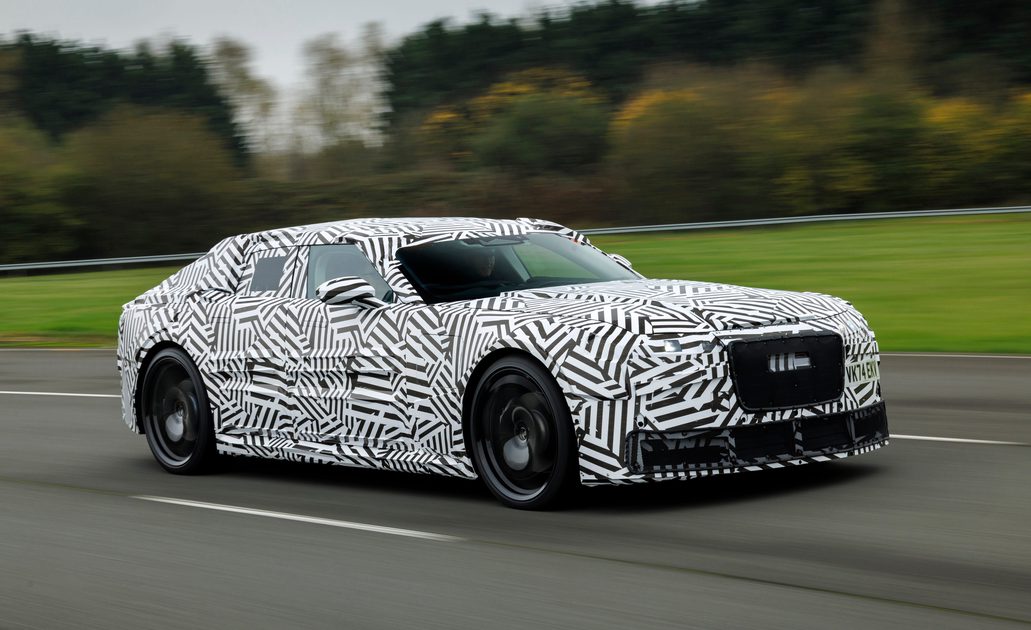
Jaguar is reinventing itself as an exclusive, ultra-premium EV brand. Its first model will be a four-door grand tourer entering production in late 2026. Very little has been officially disclosed — the car might be called the I-Type — though prototype testing on public roads began in November 2024. Spy images show a large, imposing sedan body closely related to the controversial Type 00 concept. Jaguar is targeting an EPA-estimated range of at least 430 miles and the ability to add 200 miles in 15 minutes via a fast charger. The price is expected to exceed $100,000, and the car could develop up to 986 horsepower.
Kia's compact EV3, expected to reach U.S. shores in 2026, will follow the celebrated EV6 and EV9. Production styling keeps the concept's distinctive exterior while simplifying the interior with a spacious, functional layout incorporating recycled materials in the cabin. Powertrain details are incomplete, but Kia claims the long-range version will deliver 350 miles from an 81.4-kWh battery. Front-wheel drive is standard — with a 7.5-second 0-to-62-mph time for single-motor models — and all-wheel-drive versions are anticipated. The EV3 could start as low as $30,000.
No comments yet.