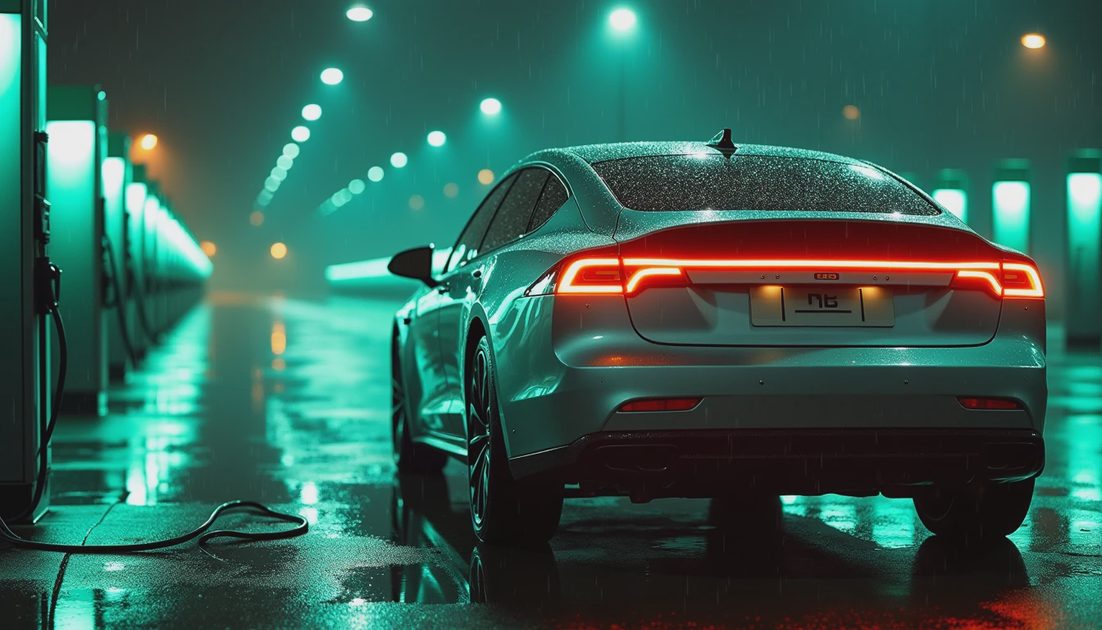
The global auto market is on track to nearly double by 2035—and EVs are the loudest reason why
Three years ago, “the auto industry will be an $8.5 trillion market” would’ve sounded like conference-stage hype. Now Market Research Future is putting a number on it: the Automotive Industry market is projected to grow from $4,357.69 billion in 2025 to $8,508.56 billion by 2035, a 6.92% compound annual growth rate.
That’s not a small bounce. That’s a structural reshaping—powered by electrification, “smart” tech, and the not-so-glamorous reality that regulations and consumer expectations are converging fast. If you’re shopping for a car over the next few years, this matters because it explains why your next daily driver is increasingly defined by software, sensors, and charging—not just horsepower and cupholders.
Here’s the part people miss: this isn’t just “EVs are growing.” It’s EVs plus advanced safety systems plus regional tech adoption dynamics all stacking up into one big growth curve.
[By the Numbers]
- Global automotive market: $4,075.65 billion (2024)
- Global automotive market: $4,357.69 billion (2025)
- Forecast market size: $8,508.56 billion (2035)
- CAGR (2025–2035): 6.92%
- North America automotive market value: $1,020 billion
- Key drivers called out: EV demand, advanced safety systems, electrification, smart technologies, sustainability initiatives, autonomous driving advancements
What’s actually pushing the industry to $8.5 trillion
MRFR frames the current moment as a “transformative shift” toward electrification and smart technologies. Translation: the product is changing, and the business model is changing with it.
Electrification is the headline act, especially in North America, which MRFR describes as the largest market and a region that “continues to lead in innovation” thanks to “strong demand for electric vehicles (EVs) and advanced safety systems.” That pairing is important. EV adoption isn’t happening in isolation; it’s being bundled with higher expectations around driver-assistance and safety tech. Consumers are effectively being trained to expect more automation and more protection as standard equipment.
Then there’s the “smart technologies” wave, with MRFR pointing to Asia-Pacific as a region where integration of smart tech is gaining traction and where automotive innovation is growing rapidly. Even if you’re buying in the US, what happens in Asia-Pacific matters because it sets the pace for how quickly software-defined features, connected services, and tech-forward UX become table stakes across global platforms.
Sustainability initiatives are the third leg of the stool. MRFR notes they’re increasingly critical, shaping both consumer preferences and regulatory frameworks across regions. That doesn’t just mean “more EVs.” It means product planning, manufacturing choices, and compliance costs all become part of the competitive equation—and that can accelerate tech adoption when automakers decide it’s easier to move forward than to fight the tide.
Finally, MRFR highlights “advancements in autonomous driving” as a key driver propelling growth in North America and Asia-Pacific. No, this isn’t a promise that robotaxis will instantly take over your commute. But it is a reminder that automakers are investing heavily in automation-related development—and that spend shows up in market growth forecasts.
North America’s $1,020 billion clue: EVs and safety tech are the growth flywheel
MRFR pegs North America’s automotive market at $1,020 billion, and attributes its innovation lead to EV demand and advanced safety systems, plus “technological adoption and a mature consumer base.”
That last phrase—mature consumer base—matters. It implies buyers with purchasing power, established expectations, and a willingness to pay for tech that feels genuinely useful (or at least feels premium). In practice, it helps explain why EVs and advanced safety features get product priority here: the market rewards it.
What’s also implicit: once advanced safety systems become common, they stop being differentiators and start being requirements. Automakers then have to compete on how smoothly those systems work, how confidently they perform, and how well they’re integrated into the overall driving experience. That’s the kind of arms race that pushes spending, accelerates iteration cycles, and ultimately feeds the broader market growth MRFR is modeling.
The competitive roster: legacy giants and EV-era pressure
MRFR’s list of “top market leaders” reads like a who’s-who of global manufacturing muscle: Toyota, Volkswagen Group, General Motors, Ford, Honda, BMW, Daimler, Hyundai, Nissan, BYD Auto, and Stellantis.
Two takeaways from that lineup:
First, this forecast isn’t predicated on one disruptor “winning.” It assumes the incumbents remain central players—because they still have scale, supply chains, distribution, and the ability to industrialize new tech quickly when they commit.
Second, the inclusion of BYD Auto alongside the traditional giants is a quiet signal of where the pressure is coming from. The market’s growth is tied to electrification, and EV-focused momentum is now large enough that any “global leaders” list looks incomplete without a company that has built a major identity around EVs.
What it means for actual car shoppers (not just investors)
A forecast from $4,357.69 billion in 2025 to $8,508.56 billion by 2035 is basically the industry saying: “We’re rebuilding the car around batteries, software, and sensors—and we’re going to sell a lot of them.”
If you’re a young professional planning your next purchase, here are the practical implications embedded in MRFR’s trend summary:
- EVs are no longer a niche storyline. MRFR explicitly ties North American innovation leadership to EV demand. Expect more choice, more marketing, and more product cadence around electrified options.
- Advanced safety systems aren’t optional in the product roadmap. They’re part of what MRFR cites as demand drivers, meaning automakers will keep pushing these features through trims and segments.
- “Smart technologies” will keep spreading across regions. Asia-Pacific’s rapid growth in automotive innovation and smart tech integration tends to influence the global direction of interfaces, connected features, and how vehicles are designed around software.
- Sustainability isn’t just a badge—it’s a planning constraint. MRFR calls it increasingly critical, shaping regulations and preferences. That’s the kind of pressure that nudges buyers toward electrified options and pushes automakers to make them more mainstream.
The hype cycle will keep screaming about autonomy and “revolutionary” tech. The more grounded story—based on MRFR’s own framing—is that the industry’s growth is coming from compounding shifts: electrification plus safety systems plus smart tech plus sustainability. None of those alone doubles a global market. Together, they can.
No comments yet.