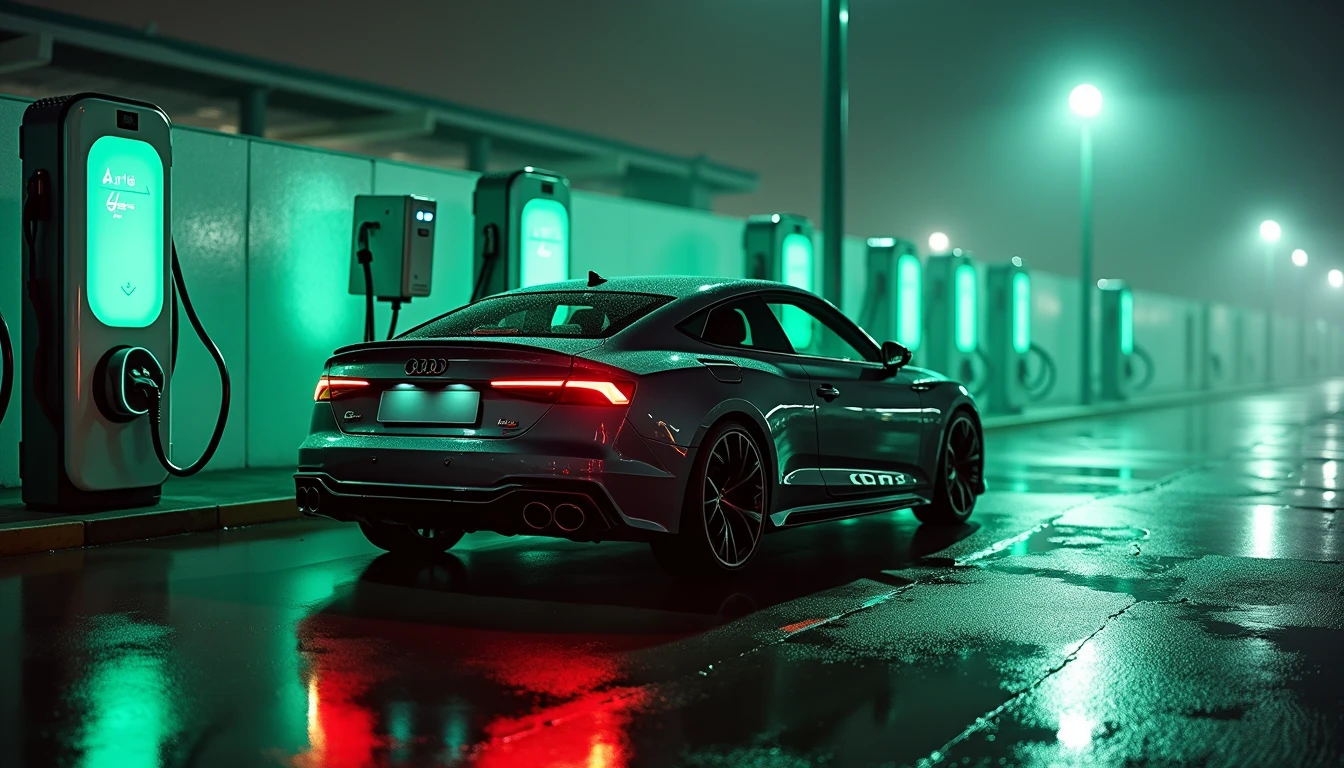
The RS Badge Goes Plug-In: Audi’s 630-HP RS5 Hybrid Leads a Weirdly Exciting 2026–2029 Wave
Three years ago, nobody predicted we’d be talking about an Audi RS model with a 25.9-kWh battery and 52 miles of EV range—but here we are. And it’s not some half-hearted compliance special, either: Audi says the next-gen 2027 RS5 is a plug-in hybrid packing 630 horsepower and 608 lb-ft of torque from a 2.9-liter twin-turbo V-6 paired with an eight-speed automatic. That’s real RS energy, now with the ability to silently commute without waking your neighbors (or your accountant).
This broader “future cars” outlook—spanning 2026 through 2029—has a clear theme: the industry is done pretending it’s all-in on a single powertrain ideology. Even Alfa Romeo is backpedaling from an EV-only plan for its next Stelvio. Meanwhile Audi is experimenting with electrification where you’d least expect it: the RS badge.
Let’s talk about what’s actually confirmed, what’s delayed, and what’s worth putting on your 2027–2028 shopping radar—without swallowing any hype whole.
Audi’s RS5 Plug-In Hybrid Is the Most Important RS Car in Years
Audi has confirmed North America will get the next-generation 2027 RS5—and the big headline is that it’s the first plug-in hybrid for the Audi RS brand. The photos suggest the usual RS playbook (wider, meaner, more muscle), but the numbers are what matter because they tell you Audi isn’t using electrification as a performance crutch—it’s using it as a performance amplifier.
---
By the Numbers: 2027 Audi RS5 Hybrid (confirmed)
- Powertrain: 2.9-liter twin-turbo V-6 + plug-in hybrid system
- Transmission: 8-speed automatic
- Output: 630 horsepower / 608 lb-ft of torque
- Battery: 25.9 kWh
- EV range: 52 miles (all-electric)
- Price: “about $125,000” start (based on European model; market pricing not set)
---
Two things jump out. First: 52 miles of EV range is not token range. That’s enough to cover a lot of daily driving for young professionals who can charge at home or work, while keeping a big-power gasoline setup for weekends. Second: with 630 hp, Audi is clearly intent on avoiding the “electrified means softened” narrative.
Pricing is the one area where you should keep your pencil sharp. The source notes that market prices “are not yet set in stone,” and the ~$125,000 figure is an estimate based on the European model—not an official U.S. MSRP. Treat it as a directional signal, not a number to take to your dealer.
Alfa Romeo Delays the Next Stelvio—and That’s Actually Good News for Gas Fans
On the Alfa side, the story is less about raw specs and more about timing and strategy. The Stelvio SUV was expected to get a new generation in 2027, but official FCA statements say Alfa is extending the current generation’s shelf life until at least 2027. Translation: the replacement Stelvio won’t debut until the 2028 model year.
The current Stelvio rides on the FCA Giorgio platform and has been mostly unchanged since its release in 2017—which is a long run in a segment that moves fast. But the delay isn’t just “Alfa being Alfa.” It’s tied to internal strategic restructuring, because the next Stelvio is no longer destined to be EV-only.
That pivot matters. A lot. It signals what plenty of buyers have been saying with their wallets: the market wants electrification options, not mandates—especially in performance-leaning brands where character still sells.
And here’s the kicker for the enthusiast crowd: the delay means Quadrifoglio versions are expected to make a comeback, because internal combustion engines will still be the primary focus in the next generation. For a brand built on emotional driving appeal, ditching combustion entirely was always going to be a risky bet.
---
By the Numbers: Alfa Romeo Stelvio Timeline (confirmed)
- Current-gen platform: FCA Giorgio
- Current-gen release: 2017
- Current generation extended: until at least 2027
- Successor arrival: 2028 model year
- Strategy change: not EV-only; combustion remains primary focus
---
If you’re the type of shopper who wants something stylish and a little left-field—but you don’t want to be a beta tester for a full-EV reboot—this delay may actually improve the next Stelvio’s odds of landing with the right mix of performance and usability.
Giulia Follows Stelvio onto STLA Large—EV-First, Gas Later
The Giulia’s next chapter is tied directly to the Stelvio’s. The source says the Stelvio is expected to be the first new model to debut from Alfa, with the Giulia sport sedan following soon after.
Right now both models share the FCA Giorgio platform, but the next generation will move to the STLA Large Longitudinal Platform. Stellantis’ stated strategy here is important: electric models first, then combustion models following after.
Alfa’s release timing has been delayed while the company figures out exactly which powertrains will be offered, but the source suggests more concrete details should arrive “over the next couple of months.” That’s not a spec sheet—but it is a clear signal that Stellantis is still finalizing how to balance EV rollout with continued combustion demand.
---
By the Numbers: Next-Gen Alfa Romeo Giulia (confirmed)
- Current platform: FCA Giorgio (shared with Stelvio)
- Next platform: STLA Large Longitudinal
- Rollout strategy: EV first, combustion later
- Timing: follows next Stelvio; details expected in coming months
---
If you’re cross-shopping sport sedans, the Giulia’s platform change is the headline. STLA Large Longitudinal is the foundation Stellantis is betting on for its larger, more premium products, and Alfa’s future identity—EV, ICE, or both—will ride on how well this architecture delivers the goods.
Audi’s “Concept C” Is the TT’s Spiritual Successor—But Don’t Count the Years Yet
Audi’s other future-facing tease is the all-electric two-seat sports car dubbed the Audi Concept C. The source frames it as a “spiritual successor” to the Audi TT, with production timing still unconfirmed—but positioned as something that could become reality “in the next couple of years.”
Key word: unconfirmed. Until Audi locks dates and production intent, treat this as a design and direction preview, not a car you should plan a lease exit around. Still, the idea of Audi bringing back a compact, two-seat, EV sports car shape is notable in a world where everything wants to be a crossover.
The bigger takeaway across all of this is how messy—and therefore interesting—the 2026–2029 pipeline is getting. Audi is pushing performance hybrids into places purists didn’t expect. Alfa is stretching product cycles while it rethinks EV absolutism. And both are essentially admitting the same thing: buyers want choices, and the industry’s next phase is going to be less sermon, more menu.