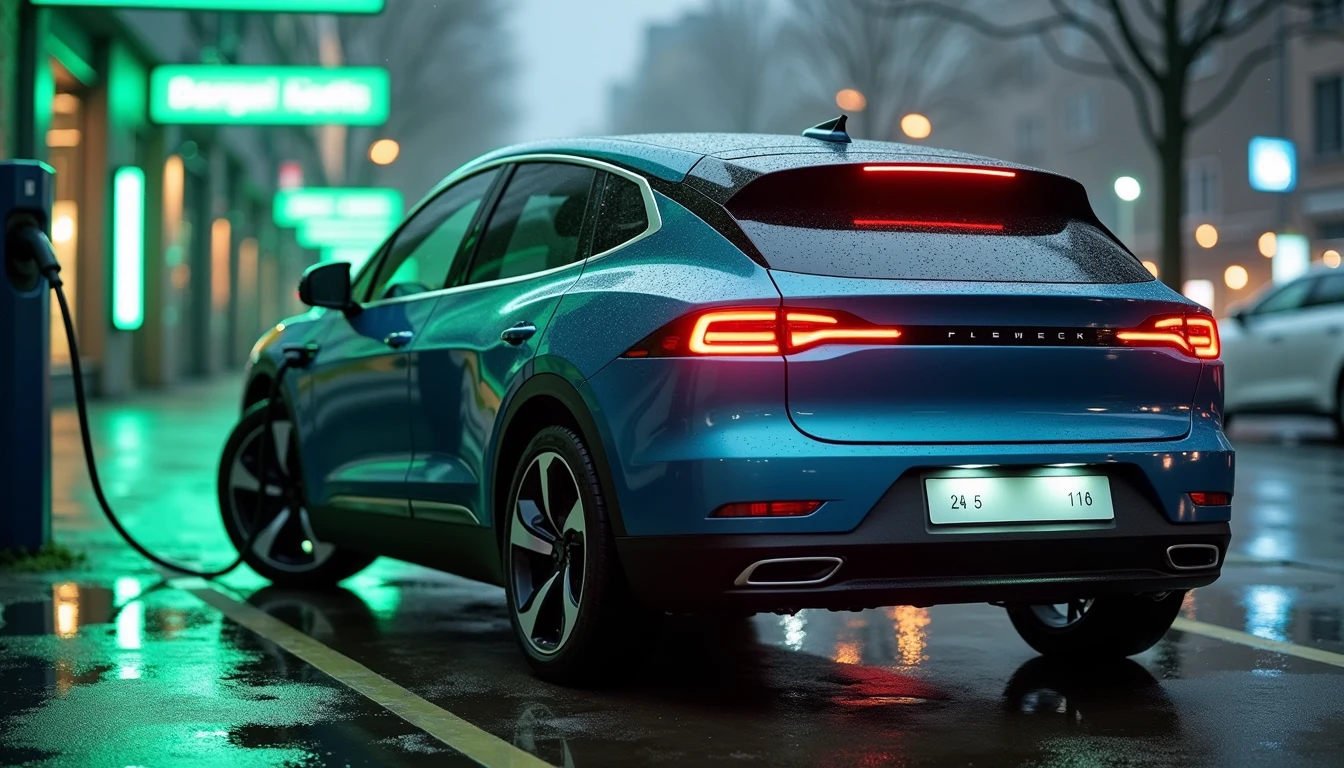
The Trillion-Dollar EV Era Is Arriving in 2030—and the Growth Rate Is Surprisingly Chill
Three years ago, the loudest EV predictions were basically “straight-line rocket ship.” Statista’s latest market forecast says the global electric-vehicle business is absolutely heading for the trillion-dollar club—but it’s doing it with the kind of steady, almost boring growth rate you’d normally associate with toothpaste, not the most disruptive drivetrain shift in a century.
Here are the numbers that matter if you’re shopping, investing, or just trying to figure out whether your next car should have a charge port or a tailpipe.
- Global EV market revenue is projected at US$996.3bn in 2026
- Forecast to reach US$1.1tn by 2030
- Growth rate (CAGR) projected at 2.88% from 2026 to 2030
- Global EV unit sales projected at 30.03m vehicles by 2030
- China is projected to generate the most revenue at US$533bn in 2026
That last bullet isn’t a plot twist—China’s been the center of gravity for EV volume and supply chain for years. But the more interesting takeaway is the shape of this curve: massive scale, modest growth.
What this forecast really says: EVs are becoming “normal,” and that’s a big deal
A US$996.3bn EV market in 2026 is already enormous. But Statista’s forecast has the global market topping out at US$1.1tn by 2030 on a 2.88% CAGR (2026–2030). Translation: EVs aren’t projected to be a niche that’s exploding; they’re projected to be a category that’s maturing.
That maturation matters for buyers. When a market shifts from chaos to routine, you typically see a few things:
- More predictable product cycles (less “first-gen weirdness”)
- Pricing pressure (more competition, more segments filled in)
- Better infrastructure planning (charging buildout follows stable demand)
Statista also projects 30.03 million EV units sold by 2030, which is the real-world “how many people are actually buying these” metric. If you’re a young professional deciding whether to go EV now or wait, that volume projection is a hint that the mainstream is coming—just not in a single dramatic leap.
By the Numbers: Statista’s worldwide EV forecast snapshot
Market revenue (worldwide)
- 2026: US$996.3bn
- 2030: US$1.1tn
- CAGR (2026–2030): 2.88%
Unit sales (worldwide)
- 2030: 30.03m vehicles
Top revenue country
- China (2026): US$533bn
Notable regional mentions in the dataset
- United States, Germany, Netherlands, China, United Kingdom
(Statista also flags Norway as a market-share leader in adoption.)
A quick, important caveat: the source lists a “volume weighted average price” for 2026 as 0.00, which reads like a placeholder or missing value—not a real-world average transaction price. So we can’t responsibly use this particular dataset to claim anything about average EV pricing trends.
The definition is broader than most people realize—and that changes the conversation
Statista’s definition of “Electric Vehicles” is not just battery-electric passenger cars. It includes:
- BEVs (battery electric vehicles)
- PHEVs (plug-in hybrids)
- FCEVs (fuel cell electric vehicles)
…and it spans multiple categories:
- Electric passenger cars
- Electric commercial vehicles (vans, buses, trucks)
- Electric two-wheelers (motorcycles, mopeds, electric bicycles)
- Electric micro-mobility (kick-scooters and other small light EVs)
So when you see “30.03m units by 2030,” you should read that as a broad electrification tally, not purely “Tesla-style” EVs. That’s not a knock—if anything, it explains how the market gets so huge while growth smooths out. Two-wheelers and commercial fleets can scale fast, but they also normalize quickly once infrastructure and supply are in place.
Statista also specifies what’s *not* in the numbers: used EVs, retrofits, and vehicles used exclusively for sharing or rental services. Revenue is based on new vehicle sales in basic configuration and excludes aftermarket mods and service fees. (Yes, as the owner of a heavily modded Miata, I respect the boundary—even if it’s no fun.)
China’s US$533bn EV revenue lead isn’t just about cars
Statista projects China at US$533bn in EV revenue in 2026, the highest globally. That tracks with a market that’s big across multiple segments—passenger vehicles, delivery fleets, buses, and the kind of lightweight urban electrics that many Western buyers rarely even consider “EVs,” even though they absolutely are.
If you’re a shopper in the US or Europe, the practical implication is simple: a huge portion of the world’s EV manufacturing gravity sits in China’s ecosystem, influencing battery supply, component pricing, and the pace of new model proliferation worldwide—even when the badge on the nose is from a legacy OEM.
The bigger picture: a trillion dollars, but not a gold rush
A US$1.1tn EV market by 2030 is the sort of scale that changes what automakers prioritize, what suppliers bet on, and what policymakers regulate. But that 2.88% growth rate over 2026–2030 is the signal flare: this isn’t being framed as a volatile, speculative surge. It’s being framed as the next normal.
For buyers, “normal” is underrated. Normal is when your apartment complex finally stops treating EV charging like a luxury amenity. Normal is when more vehicle segments—work trucks, family crossovers, compact commuters—are available as electrified options without compromises that feel like beta testing.
EVs don’t need hype anymore. They need scale, reliability, and boring competence. If Statista’s forecast lands anywhere close, that’s exactly what the market is building toward.