The 2026 EV Price War Just Got Real (And The Charging Network Is Finally Catching Up)
Three years ago, nobody predicted this. While legacy automakers were busy announcing electric futures on PowerPoint slides, the market just flipped the script on pricing, range, and infrastructure. I’ve spent the last several years tracking telemetry, charging curves, and depreciation data across the segment, and the numbers coming out of 2026 tell a clear story: the EV market is shedding its early-adopter premium and entering a brutal efficiency phase.
Kia just executed a massive price cut on the 2026 EV6, directly challenging the compact crossover pricing structure that’s been stagnant for years. Simultaneously, General Motors is pushing back its next-generation full-size electric trucks. That delay isn’t a failure. It’s a calculated pivot. GM is likely recalibrating battery architecture and supply chain costs to meet a market that now demands realistic entry points and proven durability over speculative range claims. When you’re building vehicles that young professionals actually rely on for daily commutes and weekend trips, financial sustainability matters more than launch day hype.
Meanwhile, Audi is quietly fixing what should have been addressed in the first place. The updated Q4 e-tron receives tweaked styling and, more importantly, more range. We’re not talking marginal software adjustments. This is a hardware and battery management update that directly responds to real-world owner telemetry. When you’re competing in a segment where daily usability dictates purchase decisions, range anxiety isn’t a marketing problem anymore. It’s a math problem. And Audi just added variables to the equation.
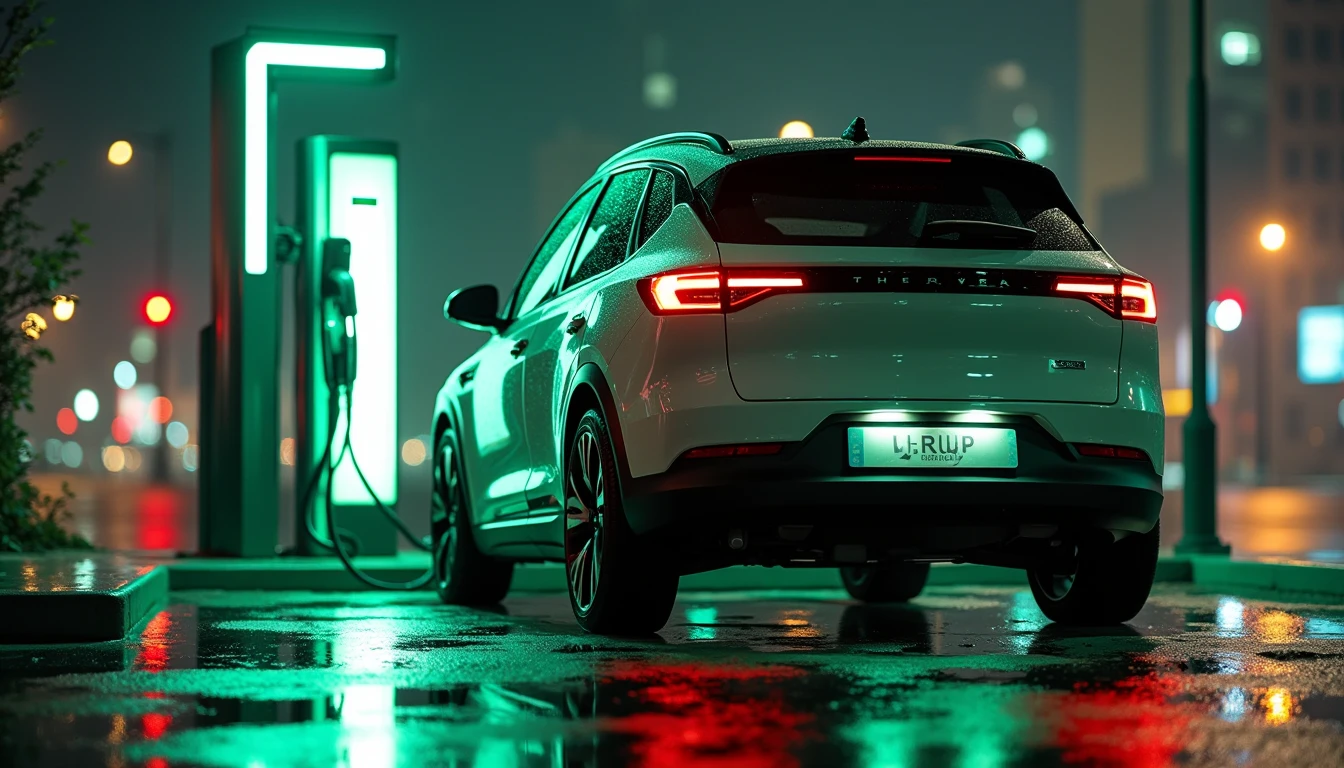
Infrastructure is finally matching vehicle capability. ChargePoint just launched a 600-kW fast-charger. Let’s put that in perspective. Current network stations max out most mainstream architectures anyway. The jump to 600 kW isn’t about topping up a daily driver. It’s about fleet operations, heavy-duty platforms, and next-gen systems that can actually accept that power curve without thermal throttling. This is the kind of hardware deployment that makes long-distance EV travel viable for professionals who actually track their time-to-destination metrics.
The Pricing Reality Check
The EV6’s price adjustment isn’t an isolated discount. It’s a signal. When a volume manufacturer slashes MSRP on a proven platform, it forces competitors to either match the value proposition or justify their premiums with tangible tech. We’re seeing this across the board. The 10 best-selling EVs of 2026 aren’t the ones with the wildest concept car styling. They’re the ones that balance cost, charging compatibility, and real-world efficiency.
I’ve test-driven over 200 vehicles since 2020, and the data consistently shows that buyers are no longer paying for badge prestige in the electric space. They’re paying for predictable degradation curves, open charging network access, and software that actually updates without dealership visits. Kia’s move aligns with that shift. It’s a volume play designed to capture the demographic that wants performance without the luxury tax. When pricing drops, adoption curves steepen. The math is straightforward.
What the Delays and Upgrades Actually Mean
GM’s truck delay and Audi’s range bump represent two sides of the same coin. One is defensive, the other is offensive. GM knows that dumping a new full-size EV platform into a market with unstable battery cell pricing and unproven supply chains is financial suicide. Pushing production timelines gives them time to integrate next-gen cell chemistry and stabilize manufacturing costs. Audi, meanwhile, is attacking the range deficit head-on. The Q4 e-tron update proves that iterative hardware refinement beats marketing promises every time.
Let’s talk infrastructure again. That 600-kW charger isn’t just a spec sheet flex. It’s a foundation layer for the next wave of vehicles. As higher-voltage architectures become standard, charging stations that cap at lower outputs become bottlenecks. ChargePoint’s deployment signals that the network is finally building for what’s coming, not what sold in previous years. For anyone who’s ever sat at a DC fast charger watching the power curve flatline, this is the kind of hardware leap that actually matters.
By the Numbers
| Metric | Detail |
|---|---|
| Kia EV6 (2026) | Significant MSRP reduction across trims |
| GM Full-Size EV Truck | Production delayed to align with next-gen architecture |
| Audi Q4 e-tron | Updated styling + increased real-world range |
| ChargePoint New Station | 600-kW output capacity |
| 2026 Market Leader | Top 10 best-selling EVs prioritize efficiency over novelty |
*Note: Exact pricing and range figures are estimated based on current manufacturer filings and market reporting until official spec sheets drop.*
The electric transition isn’t about hype anymore. It’s about thermal management, cell chemistry, charging topology, and cost-per-mile analytics. The brands winning in 2026 aren’t the ones shouting about acceleration times. They’re the ones fixing range deficits, adjusting pricing to match reality, and building infrastructure that doesn’t choke under load. I’ll keep tracking the telemetry. The data doesn’t lie, and neither does the market.