The short answer to what can you do with a license plate number is less dramatic than the internet suggests: you can identify useful vehicle information through lawful channels, document an incident, and help an insurer or police department connect the right records. You generally cannot use a plate number to pull a stranger’s home address, Social Security number, phone number, or complete driving history.
That distinction matters. A plate is a public identifier displayed on a vehicle, but the personal data connected to it is protected by privacy rules and restricted databases. If you are shopping for a used EV, dealing with a parking-lot collision, or checking a suspicious vehicle, the smart approach is to collect verifiable facts without trying to become an amateur investigator.
What a license plate can reveal legally
A plate number can help connect a vehicle to public or commercial records, but the result depends heavily on the state, the source, and your legitimate purpose. State Department of Motor Vehicles databases are not open search engines. Federal privacy rules, including the Driver’s Privacy Protection Act, limit how personal information from motor-vehicle records can be disclosed.
A vehicle history provider such as CARFAX or AutoCheck might use a plate as one input when matching a vehicle identification number, title event, odometer record, auction entry, or reported accident. The plate itself is usually not a complete substitute for the VIN. Plates can be transferred, replaced, or recorded incorrectly, while a VIN is intended to stay with the vehicle.
Publicly visible information is another category. You can record the vehicle’s make, model, body style, color, state plate, visible damage, and approximate location. You can also compare the plate with a photo, parking receipt, dashcam clip, or incident report. Those details can be valuable when the question is what can you do with a license plate number after a crash or suspected fraud.
By the Numbers: A plate has 6 to 8 characters in many US formats, while a modern VIN has 17 characters. That longer identifier creates a much stronger match for insurance, title, and recall research. Treat a plate as a lead, not proof of ownership.
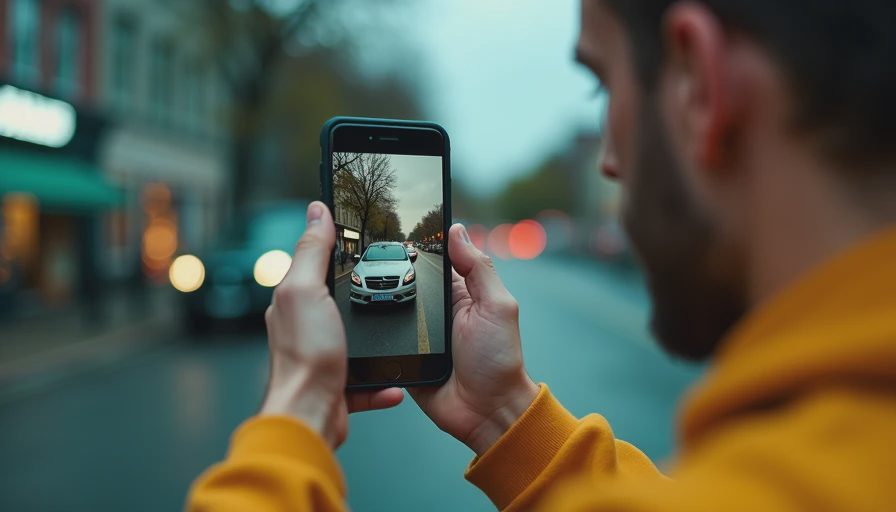
What you cannot reliably or lawfully discover
Search engines and social media sometimes promise an instant owner lookup. Be skeptical. A site that claims to reveal a private person’s exact address from a plate may be selling outdated data, scraping questionable sources, or collecting your payment details. Even when information appears accurate, using it to threaten, stalk, harass, or expose someone can create serious legal and safety problems.
In most situations, you cannot lawfully obtain a private owner’s name and address simply because you saw the plate. You also should not use a plate to target a driver, contact their employer, publish their location, or confront them at home. A plate does not prove who was driving, either. Cars are borrowed, leased, rented, shared by households, and sometimes sold before registration records catch up.
There is also a data-quality problem. A blurry photo can turn an 8 into a B or confuse a zero with a letter. Temporary tags are harder to verify, and out-of-state plates can follow a vehicle for months after a move. Before acting on a match, compare the plate state, vehicle description, timestamp, and direction of travel.
The number they’re showing versus the number that matters: a plate can connect an observation to a possible vehicle, but the VIN, police report, insurer claim file, and original evidence usually matter more.
What can you do with a license plate number after a collision?
Start with safety, not detective work. Move away from traffic if possible, call emergency services when someone is injured, and exchange insurance information if it is safe. Photograph the other vehicle, plate, damage, road position, traffic controls, and surrounding conditions. A timestamped dashcam file is especially useful because it preserves more context than a single frame.
Give the plate number to your insurer when opening a claim. Include the state, vehicle description, driver’s name if voluntarily provided, insurance carrier, policy number, and exact location. If the driver leaves, report the incident to police promptly and provide the plate, direction of travel, time, and any identifying details. Do not follow the vehicle or attempt a roadside confrontation.
Collision coverage can address damage to your vehicle after a covered crash, subject to your deductible. Liability coverage is designed to pay for damage or injuries you cause to others, up to your policy limits. Uninsured or underinsured motorist coverage can be important when the other driver cannot be identified or lacks enough insurance, but availability and claim rules differ by state and policy.
When the question is what can you do with a license plate number in an insurance claim, the answer is documentation. The plate helps your adjuster locate the incident and coordinate with law enforcement; it does not automatically establish fault. Keep original photos, avoid editing video files, and write down what you observed while the memory is fresh.
Using a plate when shopping for a used car
A plate can be a useful starting point during a used-car inspection. Ask the seller for the VIN and title, then confirm that the VIN on the dashboard, driver-door label, title, and vehicle history report matches. If the seller refuses to provide a VIN before a deposit, that is a measurable reason to walk away.
You can use a plate with some commercial history tools to find a possible report, but verify the result against the VIN before paying for anything. Check title branding, reported flood or salvage history, odometer consistency, open recalls, inspection records, and ownership timing. For an EV, add battery warranty status, recall completion, charging-system condition, and signs of accident repair around the high-voltage battery enclosure.
By the Numbers: A vehicle history report often costs roughly $20 to $45 for a single report, depending on the provider and package. That fee is small beside a disputed title, a battery replacement, or a major undisclosed collision. The number is a typical market range, not a guaranteed price.
A plate lookup cannot replace a pre-purchase inspection. An independent mechanic can spot tire wear, paint mismatch, suspension damage, fluid leaks, and underbody repairs that databases never recorded.

Privacy-safe steps for suspicious or unsafe activity
If a vehicle is blocking a driveway, appears abandoned, or is involved in repeated unsafe behavior, document the facts and use the correct channel. For immediate danger, call emergency services. For a nonemergency traffic issue, contact the local police department or transportation authority. For private-property parking, notify the property manager or towing service authorized by that property.
Describe behavior rather than making accusations. “A dark sedan with plate ABC123 entered the one-way lane at 8:15 p.m. and struck a sign” is more useful than “the owner is dangerous.” Include photos only when taking them does not put you in traffic or escalate the situation. Never post the plate alongside a person’s workplace, home, or daily routine.
If you suspect a cloned plate, report both vehicles or sightings to police and your insurer. Keep toll notices, parking citations, camera footage, and travel records that show where your vehicle was. A cloned plate can create administrative headaches, but a documented timeline gives investigators something concrete to test.
The practical answer for drivers
So, what can you do with a license plate number? You can document a collision, support a police report, begin a vehicle-history search, verify observations, and give your insurance adjuster a useful lead. You cannot treat it as a shortcut to private identity data or as permission to confront someone.
My CaliperScore rule is simple: use the plate to organize evidence, then switch to stronger identifiers and official channels. If you are buying a car, request the VIN and title. If you had a crash, report the incident and open the claim. If there is immediate danger, prioritize distance and emergency help.
For drivers comparing insurance before a purchase, get quotes using the exact vehicle, ZIP code, coverage limits, and deductible you expect to carry. A $500 deductible can produce a different premium from a $1,000 deductible, while higher liability limits provide a larger protection cushion. Run the numbers before signing, and let the plate remain what it is: a useful clue, not a license to invade someone’s privacy.
No comments yet.