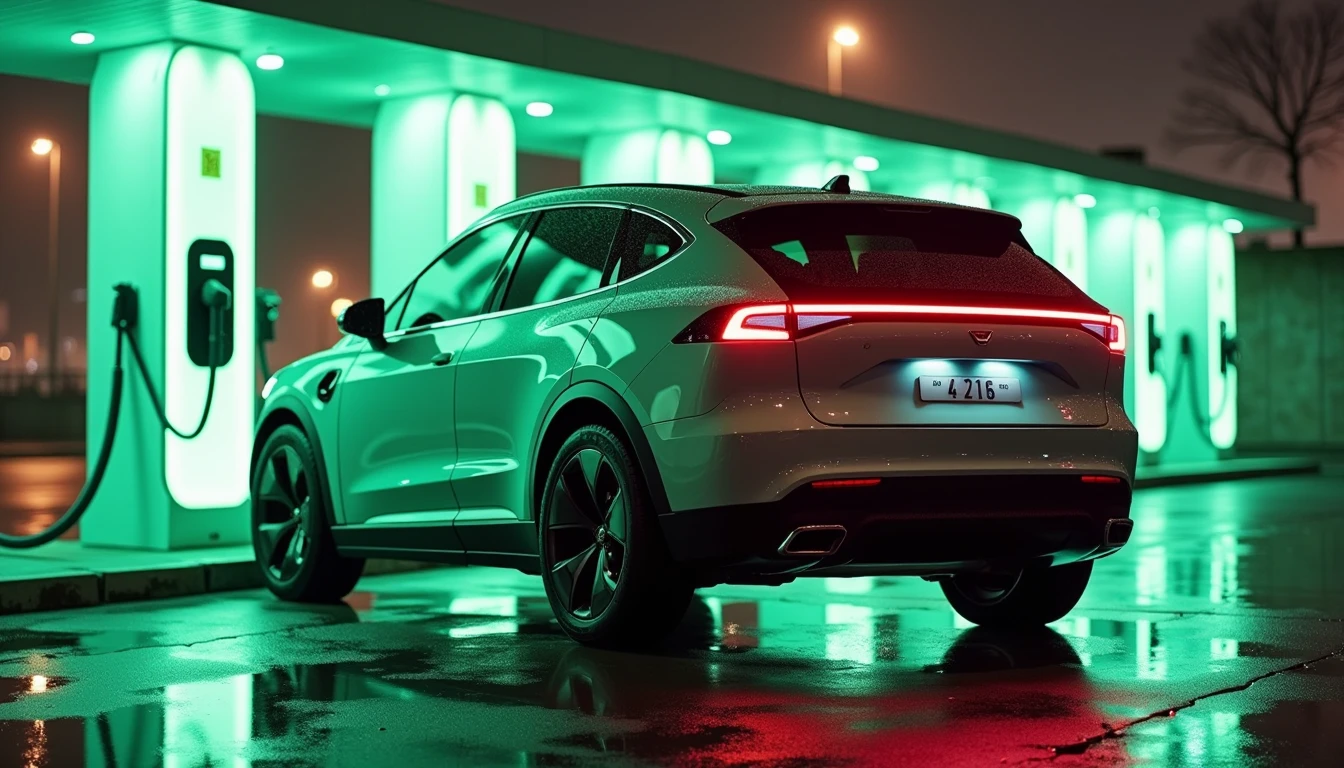
EV Sales Stalled in 2026, But Range Retention Just Crushed Every Expectation
Three years ago, nobody predicted the EV market would hit a wall right as battery technology peaked. But here we are. New EV sales have officially slowed following a record-shattering Q3 2025, and the culprit isn't range anxiety or charging infrastructure—it's the calendar. Buyers panic-bought in late 2025 to lock in federal tax credits before they expired on September 30, pulling demand forward from what should have been fall 2025 and spring 2026 sales. The result? A market that feels like it's stuck in a holding pattern. But while the transaction numbers are flat, the data under the hood tells a completely different story.
The 95% Rule: Range Retention Is Winning
Let's talk about the number that actually matters for your wallet: range retention. Recurrent's analysis of over 1 billion miles of driving data shows the average EV retains 97% of its range after three years and 95% after five years. That's not a rounding error; that's a paradigm shift. If you buy a 2026 model with 325 miles of range today, you're looking at a 309-mile EV in 2031. For context, 68% of 2023 models still exceed their original EPA range estimates today.
Automakers are getting smarter, too. We're seeing reserved battery capacity releases and range algorithm tuning via OTA updates as vehicles age. It's no longer a black box of degradation; it's software-managed longevity. Brands like Cadillac, Ford, Hyundai, Mercedes, and Rivian are showing no apparent range loss over the first five years of ownership. Note that range retention isn't the same as raw battery health or capacity—batteries are aging in every EV—but the usable range is holding steady thanks to better management.
By the Numbers: Range Retention Reality
- Average Range Retention (3 Years): 97%
- Average Range Retention (5 Years): 95%
- Data Basis: >1 Billion Miles Analyzed
- 2023 Models Exceeding EPA Range Today: 68%
- Top Retention Brands (0% Apparent Loss in 5 Years): Cadillac, Ford, Hyundai, Mercedes, Rivian
The Efficiency Trade-Off: Size vs. Smarts
Range anxiety is mathematically obsolete for the average shopper. The average expected range across popular 2026 models has climbed to 325 miles, up from 293 miles in 2025 and a distant 261 miles back in 2020. We're also seeing the fastest charging EVs add 100 miles of range in under 10 minutes. That's a coffee break, not a road trip delay.
However, don't confuse range gains with efficiency gains across the board. Overall EV efficiency has actually declined since 2018. Why? Because consumers want larger vehicles, and physics doesn't care about your preferences. Bigger batteries offset the weight and drag. That said, efficiency is improving within vehicle classes thanks to better thermal management and aerodynamics. The most efficient models still outperform the market average by roughly 40%, proving that engineering can still beat bulk if you prioritize it.
Look at the Nissan LEAF data to see this trade-off in real time. In 2016, the LEAF delivered 3.33 miles per kWh from a 30 kWh pack. By 2020, efficiency dropped to 3.09 miles per kWh as the pack grew to 62 kWh. The 2026 model pushes range with a 75 kWh battery but efficiency sits at 3.03 miles per kWh. The takeaway isn't that efficiency is dying; it's that the industry is prioritizing capacity to meet consumer demand for larger, longer-range vehicles. Within that constraint, automakers are squeezing out more miles per kWh through smarter thermal management and aero tweaks.
By the Numbers: 2026 Range & Charging
- Average Expected Range (2026): 325 miles
- Average Expected Range (2025): 293 miles
- Average Expected Range (2020): 261 miles
- Fastest Charging Capability: 100 miles added in <10 minutes
- Efficiency Gap: Top models outperform average by ~40%
Breaking the Holding Pattern
So, what's breaking the holding pattern? Fresh metal and a maturing used market. While new EV sales are digesting the post-tax-credit hangover, the pre-owned market is driving actual growth. Prices are stabilizing, inventory is expanding, and that's creating interest at new price points across the country. The EV buying experience is also maturing, with dozens of dealerships setting themselves apart with genuine EV insights and education rather than just pushing keys.
On the new car front, 2026 is bringing undeniable bright spots. The more affordable Rivian R2, the competitively priced Volvo EX30 compact crossover, and BMW's next-generation electric lineup are arriving to inject energy where it's needed. These launches matter because they address the price and size gaps that have stalled adoption for many young professionals. Of course, tariff uncertainty and shifting federal policy are forcing automakers to adjust projections and investments, so the roadmap for 2027 and beyond remains fluid. But the data suggests the fundamentals are stronger than the sales headlines imply. If you're shopping now, you're looking at a market where the tech has finally caught up to the hype, even if the transaction volume is taking a breather.