A day after electric-car startup Lucid Motors announced it would launch three new models on a more affordable mid-size platform featuring a fresh powertrain—with the first arriving next year—we now have an even richer picture of the company's roadmap. Acting CEO Marc Winterhoff headlined a half-dozen Lucid executives who laid out the brand's path to profitability at an Investor Day event in New York City on Thursday, with semi-autonomous driving functions and robotaxis playing a central role.
Lucid contends that each of the three vehicles will have its own distinct visual identity and will chase a different slice of the enormous compact SUV market. That segment towers over the luxury SUV and sedan space where the current Air and Gravity compete—$350 billion versus $50 billion, or roughly seven times the size.
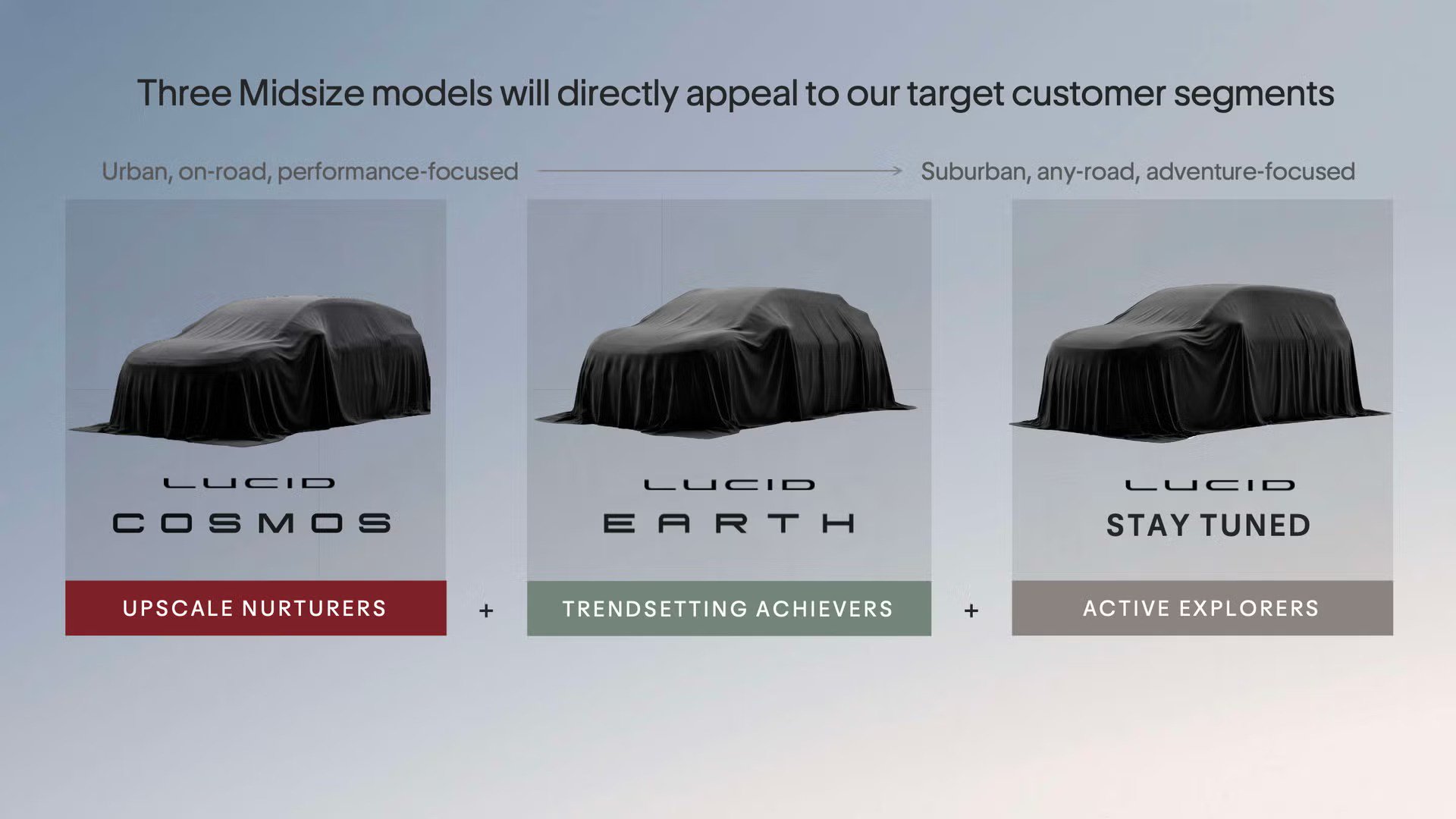
"In that [mid-size] segment," Winterhoff said, "I believe the one-size-fits-all approach is not going to work in the future." Three separate vehicles are commercially viable precisely because they will share up to 95 percent of their components, which keeps development spending in check and timelines manageable for the expanding automaker.
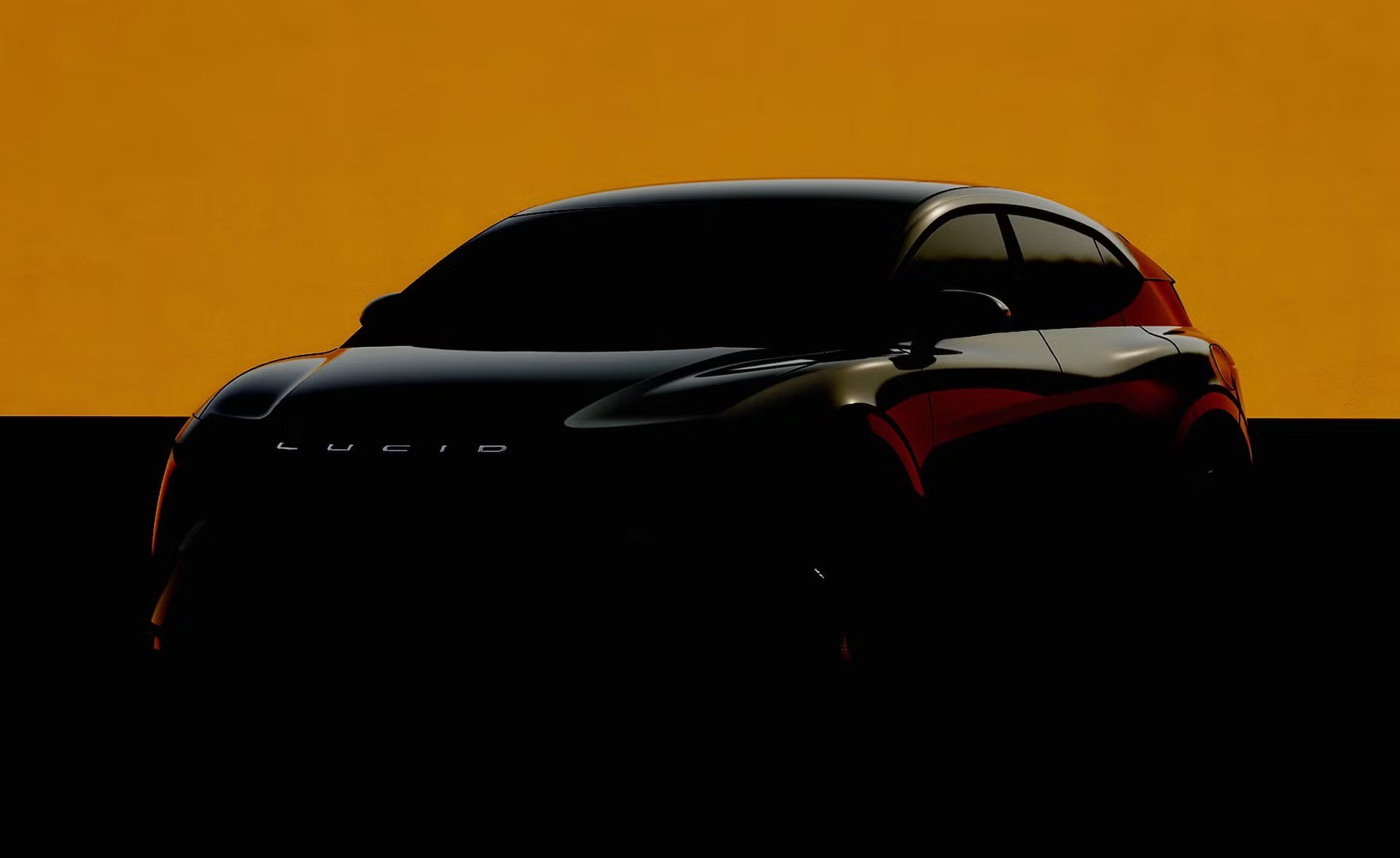
The first of the trio, called the Cosmos, is a streamlined, aerodynamic compact SUV with echoes of the Tesla Model Y, and Lucid is targeting a price tag of "under $50,000." The Cosmos will make its public debut this summer. Journalists were given access to a design mockup and a body-in-white production-validation vehicle—an early assembly intended to validate tooling—but only after surrendering their phones.
The Cosmos reads as a trimmer, sleeker sibling to the Gravity. Seating five instead of seven, it sits lower and shorter, with a swooping roofline and a tapered upper body that falls somewhere between a fastback and a conventional SUV. That shape is entirely intentional: design SVP Derek Jenkins said the drag coefficient would come in below 0.22—an exceptional figure for the utility segment that undercuts the Gravity's already-impressive 0.24.
The burgundy metallic mockup, mounted on 22-inch wheels wearing Michelin P Zero tires, had an unmistakable presence on the show floor. Jenkins noted that production versions will also be available with smaller wheels and taller sidewalls for a softer ride. Up front, the center section of Lucid's signature thin light bar is finished in black plastic, concealing a camera, radar, and lidar sensors. Angled lower lights complete the look, and illuminated individual lettering spells out the Lucid name front and rear.
Inside, a single 36-inch-wide display stretches from the gauge cluster across the full width of the dashboard, positioned just below the windshield. Jenkins said the same screen works in both left- and right-hand-drive markets, reducing cost. There is no separate center touchscreen.
Lucid made a point of highlighting its physical controls—buttons for audio and climate among them. One frustration: the air vents can only be directed through the touchscreen, which we consider an unsafe and annoying compromise. On a more positive note, the Cosmos uses door handles with purely mechanical operation, requiring no buttons or motors. Small electric motors lower each door's frameless window glass slightly when the handle is pulled, just as on the Air and Gravity.
Jenkins described the Cosmos's target audience as "upscale nurturers"—millennial parents seeking luxury and premium features in what Lucid calls a "family hub." Among the three mid-size models, the Cosmos is the most city-focused, will log the most pavement miles, and will be offered with meaningful performance for those who want it.
Cosmos production is set to begin by year-end at Lucid's Saudi Arabia factory; North American sales launch in 2027. Assembly for North American customers will then shift to Lucid's plant in Casa Grande, Arizona, roughly six to 12 months after that.
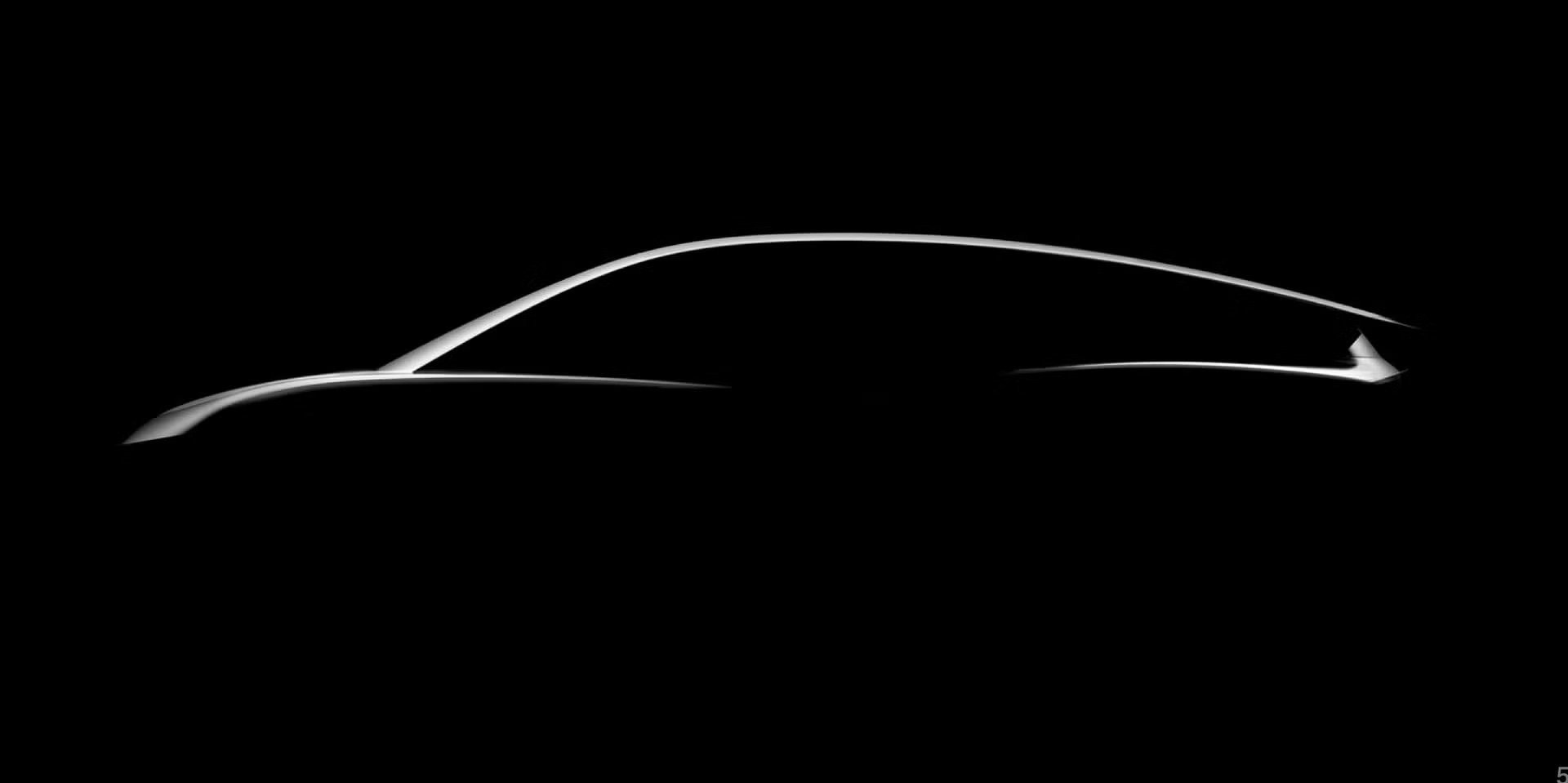
About a year behind the Cosmos comes a second mid-size vehicle, called the Earth. Its intended buyers are described as "trendsetting achievers" drawn to expressive, bold, and technology-forward design. The only visual hint at what the Earth will look like came from a single slide: a covered vehicle of similar proportions to the Cosmos, distinguished by a flatter roofline and what appeared to be a notch above the tailgate.
The third compact electric SUV in the lineup went unnamed—identified only as "Stay Tuned"—and looked boxier and considerably taller than its stablemates. The intended audience of "active explorers" skews older, values performance across all terrain, and gravitates toward the now-clichéd active lifestyle positioning. We anticipate this adventure-focused model will compete directly with the Rivian R2 for off-road capable buyers.
Lucid's engineering team began the new platform from scratch, with no carryover parts from existing models. Every design decision was guided by a principle of reducing, simplifying, consolidating, or eliminating components and cost—without abandoning the brand's core identity of quick, refined, long-range electric vehicles.
Several themes in Lucid's presentation mirrored the upcoming Ford Universal Electric Vehicle (UEV) platform, which Ford briefed journalists on last month. Ford's advanced EV chief Alan Clark summarized the philosophy as: "The best part is no part. The second-best part is one that does multiple functions." Lucid's own mantra—"Radical Efficiency"—points in the same direction, emphasizing a reduced factory footprint capable of far greater output than the Air or Gravity lines.
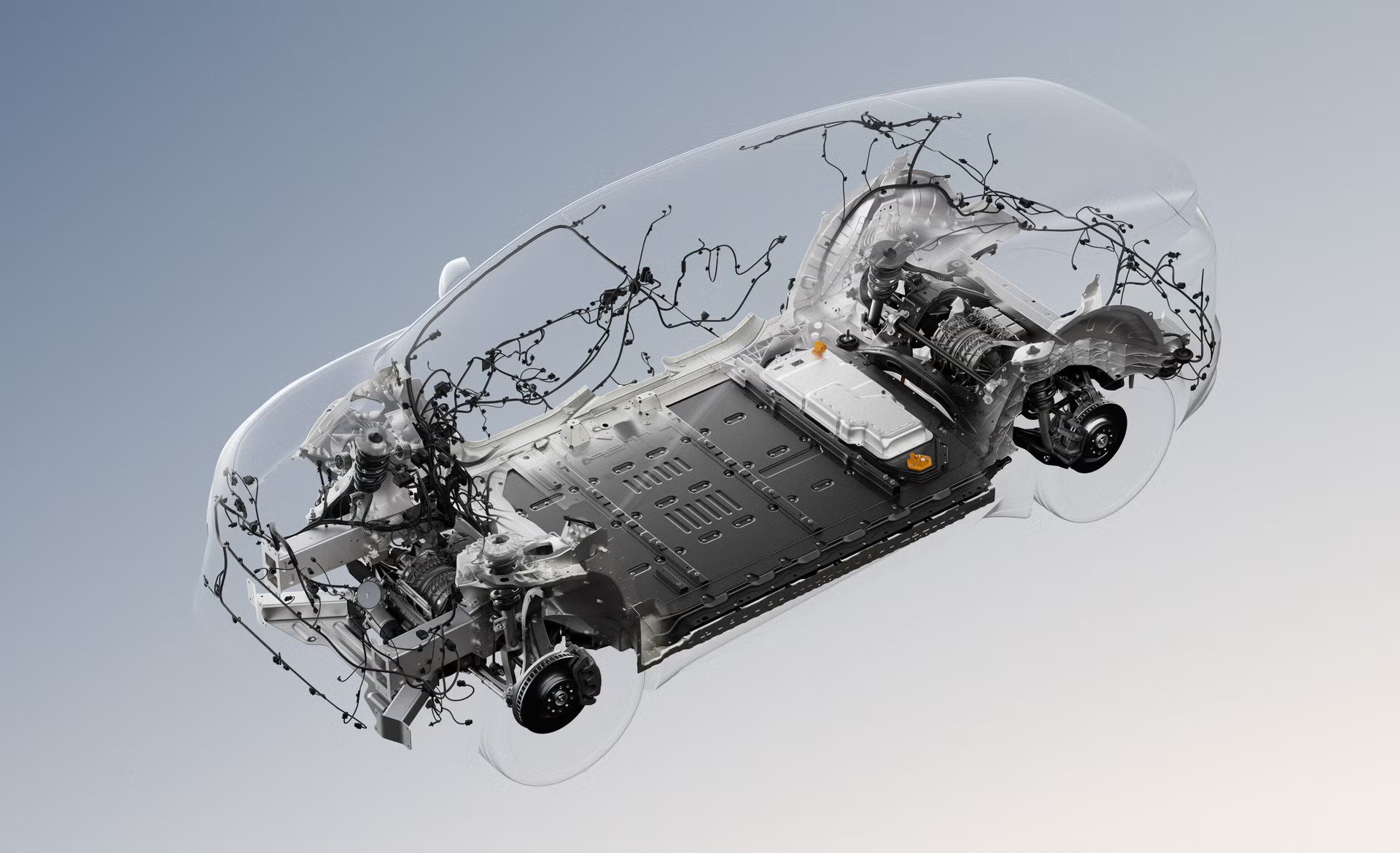
The mid-size platform uses cell-to-pack battery construction, mounting cells directly inside the enclosure rather than in intermediate modules. While the top panel of the Cosmos battery pack doesn't double as the entire floor—as Ford intends for its UEV—portions of it do. Rectangular sections of the floor shell, approximately a foot wide and spanning sill to sill beneath front- and rear-seat passengers, have cutouts through which carpeting sits directly atop the battery.
Unlike Ford and Tesla, Lucid will not use massive gigacastings. Instead, the company combines aluminum extrusions and aluminum castings within a stamped-steel body structure, selecting each material where it performs best. This makes post-collision repairs easier and less costly—an important consideration for compact EV buyers, who have felt the sting of high insurance premiums. Lucid projects the Cosmos will save owners around $1000 per year on insurance compared to "a leading U.S. EV" (almost certainly the Tesla Model Y).
Following Ford's lead, Lucid paid close attention to the wiring harness. The Cosmos runs just 60 percent of the wire count of the Gravity and has far fewer inter-wire connectors, cutting harness cost by roughly 60 percent. By the numbers: the Cosmos carries 1100 wires, versus 1300 in the unnamed U.S. EV competitor, 1900 in a South Korean rival, and 2200 in a leading Chinese SUV. Lucid also reduced the ECU count in the Cosmos to just three—two of them identical—down from 12 in the Gravity.
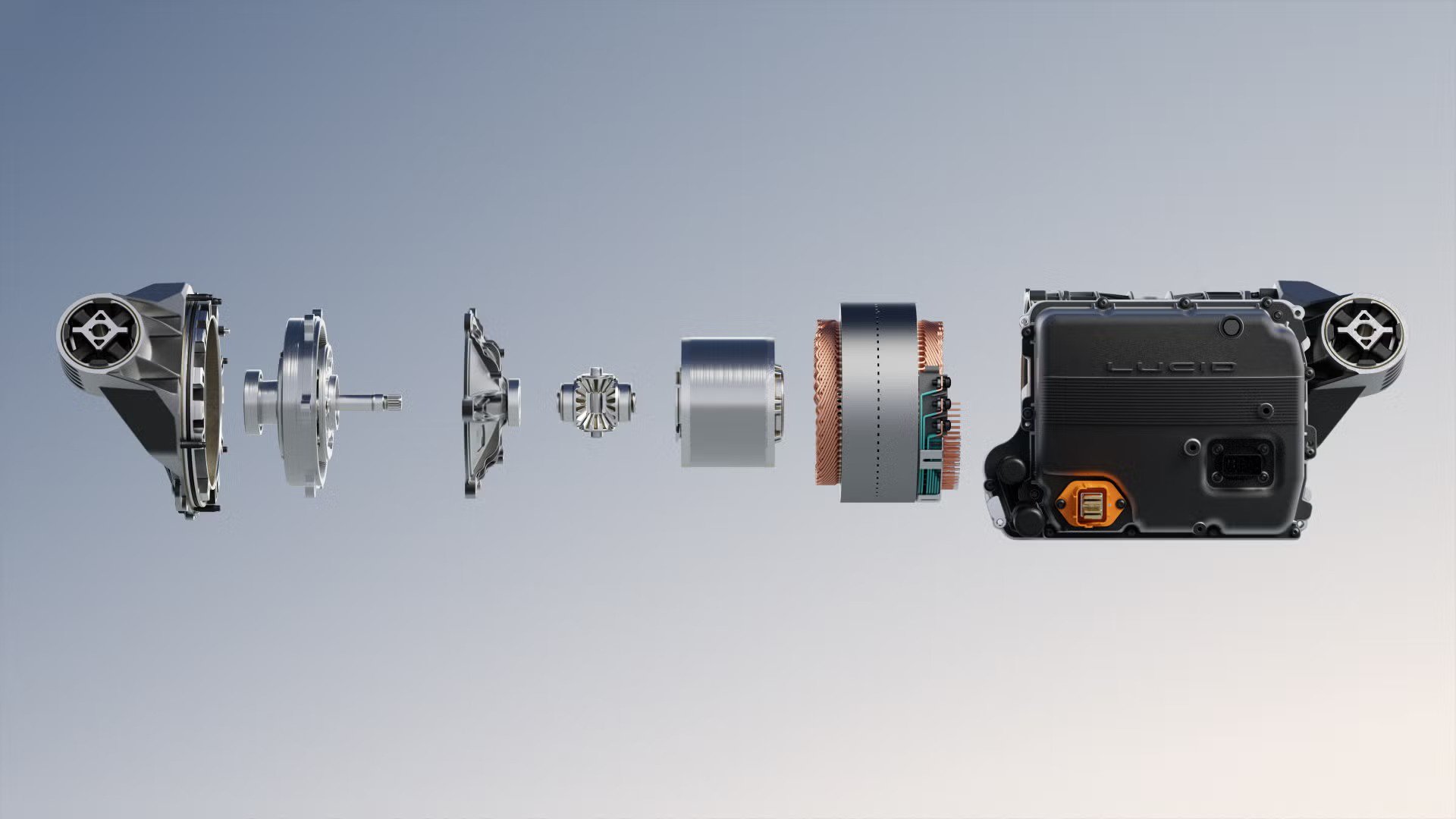
All three mid-size models share a brand-new powertrain designated Atlas. (The Air and Gravity use the earlier Zeus powertrain.) Like Zeus, Atlas is compact and lightweight relative to its output, but has been engineered from the outset for minimal part counts, lower cost, and the rapid assembly demands of high-volume production.
Atlas weighs 23 percent less than Zeus, has more than 30 percent fewer components, and its bill of materials is 37 percent lower. Chief engineer Zach Walker reported a class-leading power-to-weight ratio of 4.9 horsepower per kilogram, translating to a 0–60-mph time of just 3.5 seconds in certain Cosmos configurations.
That efficiency yields a projected average consumption of 4.3 miles per kilowatt-hour for all-wheel-drive Cosmos models, potentially stretching to 4.5 miles/kWh in a rear-wheel-drive variant—10 percent better than the nearest current competitor. The result is a smaller, cheaper battery that still delivers competitive range.
Lucid declined to share the battery's energy capacity, cell chemistry, or additional specs. "We are getting highly competitive battery costs," said Emad Dlala, SVP of engineering and software. High-energy-density cells help keep the pack as small as possible while maximizing range. Lucid consolidated multiple high-voltage components into a single unit mounted atop the pack; Walker said the battery has 80 percent fewer non-cell parts, and those non-cell parts cost nearly half as much to produce.
The Atlas drive units at the front and rear of AWD models are physically identical, eliminating the development expense of two distinct motors and power electronics packages. Could Atlas eventually find its way into updated Air and Gravity models? Executives acknowledged the possibility and hinted it could happen around 2028, but said it was not an immediate priority.
Lucid's mid-size platform is clearly intended to support a wide range of vehicle types. At Investor Day, acting CEO Winterhoff shared the stage with Andrew Macdonald, president and COO of Uber, which has already committed to purchasing 20,000 Gravity-based robotaxis equipped with sensors and software from Nuro. The two executives disclosed that the companies are finalizing an agreement to deploy Lucid's mid-size vehicles in a robotaxi program "at a scale similar to the Gravity robotaxi program," with a gradual ramp-up over time.
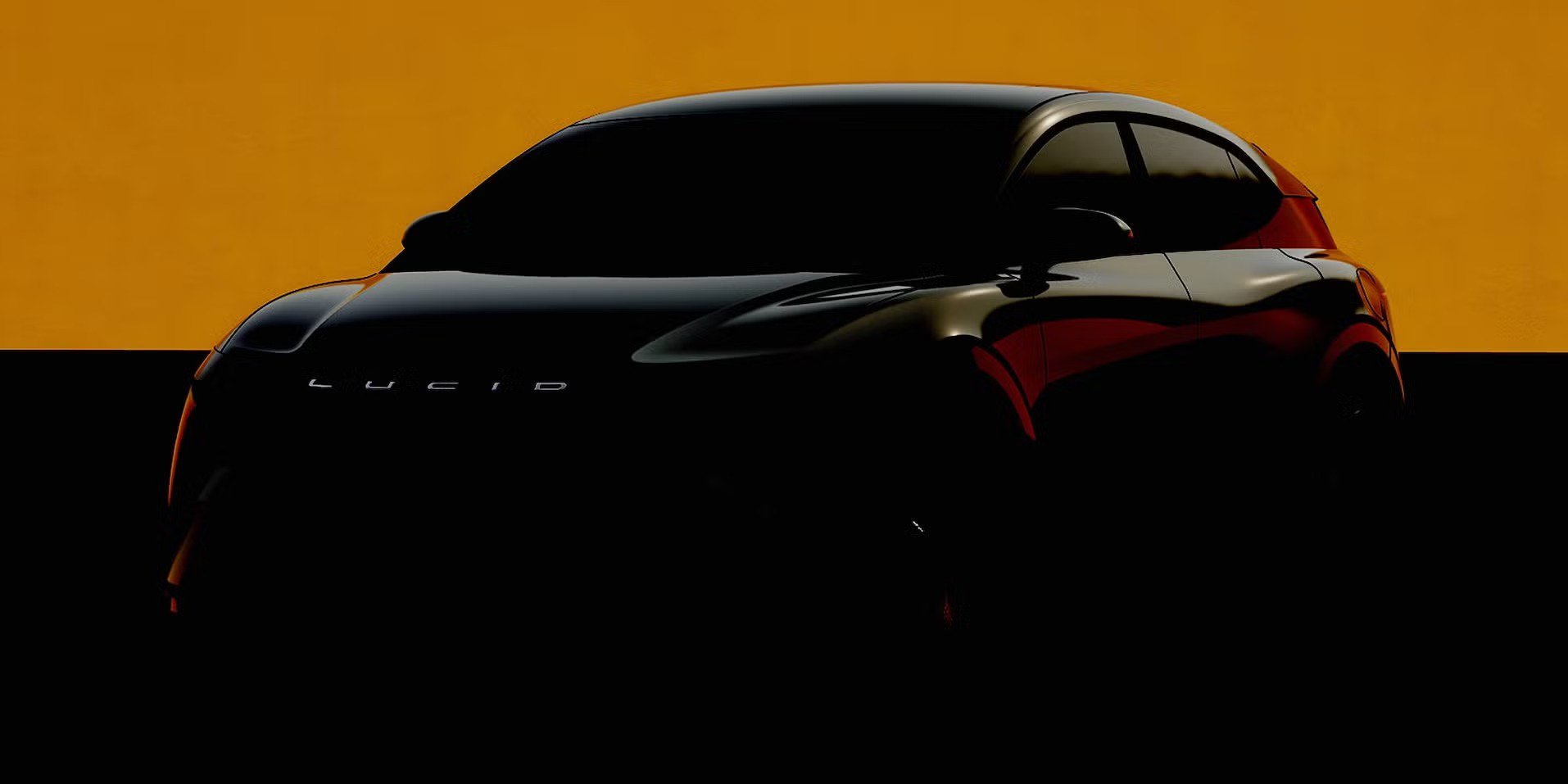
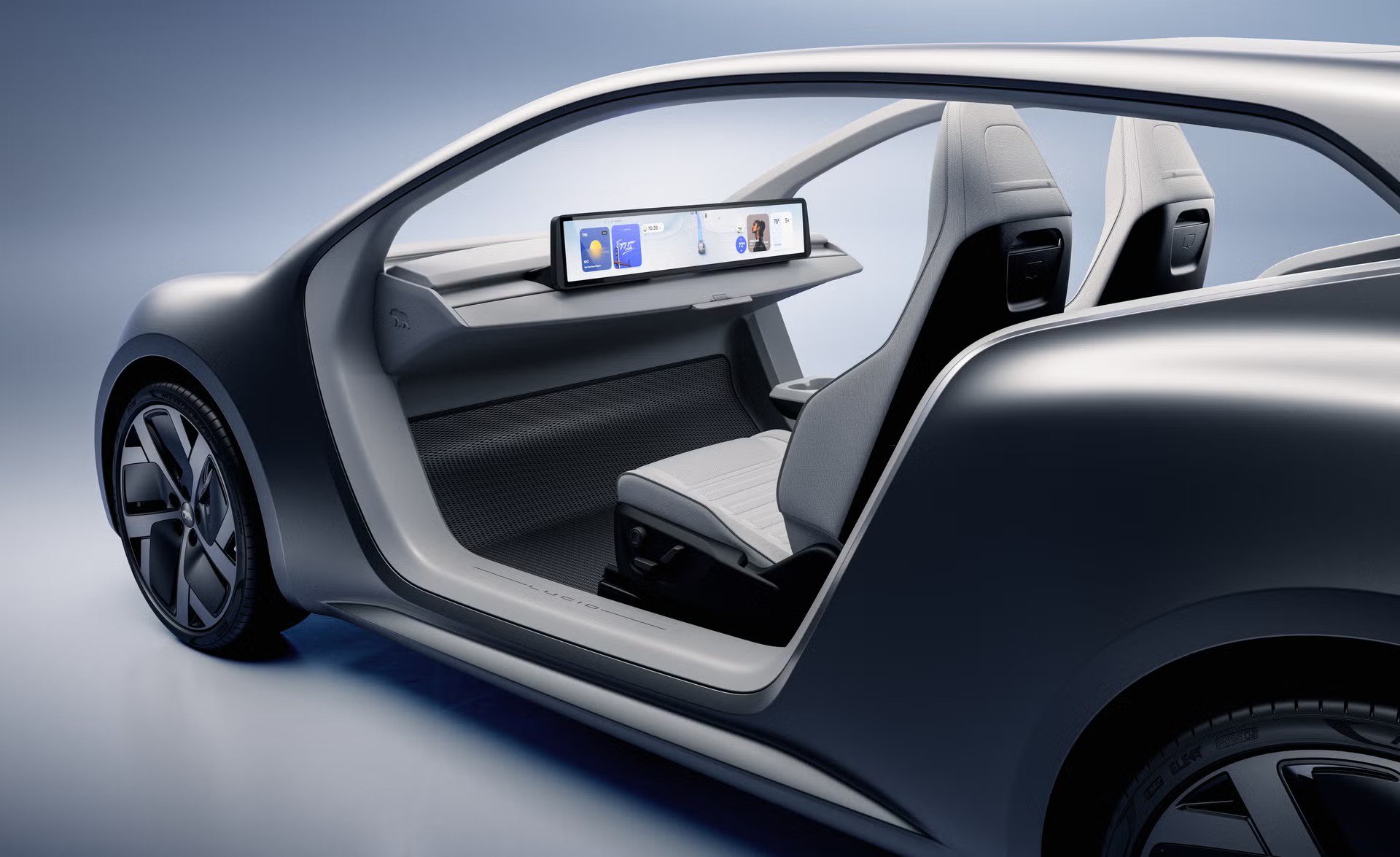
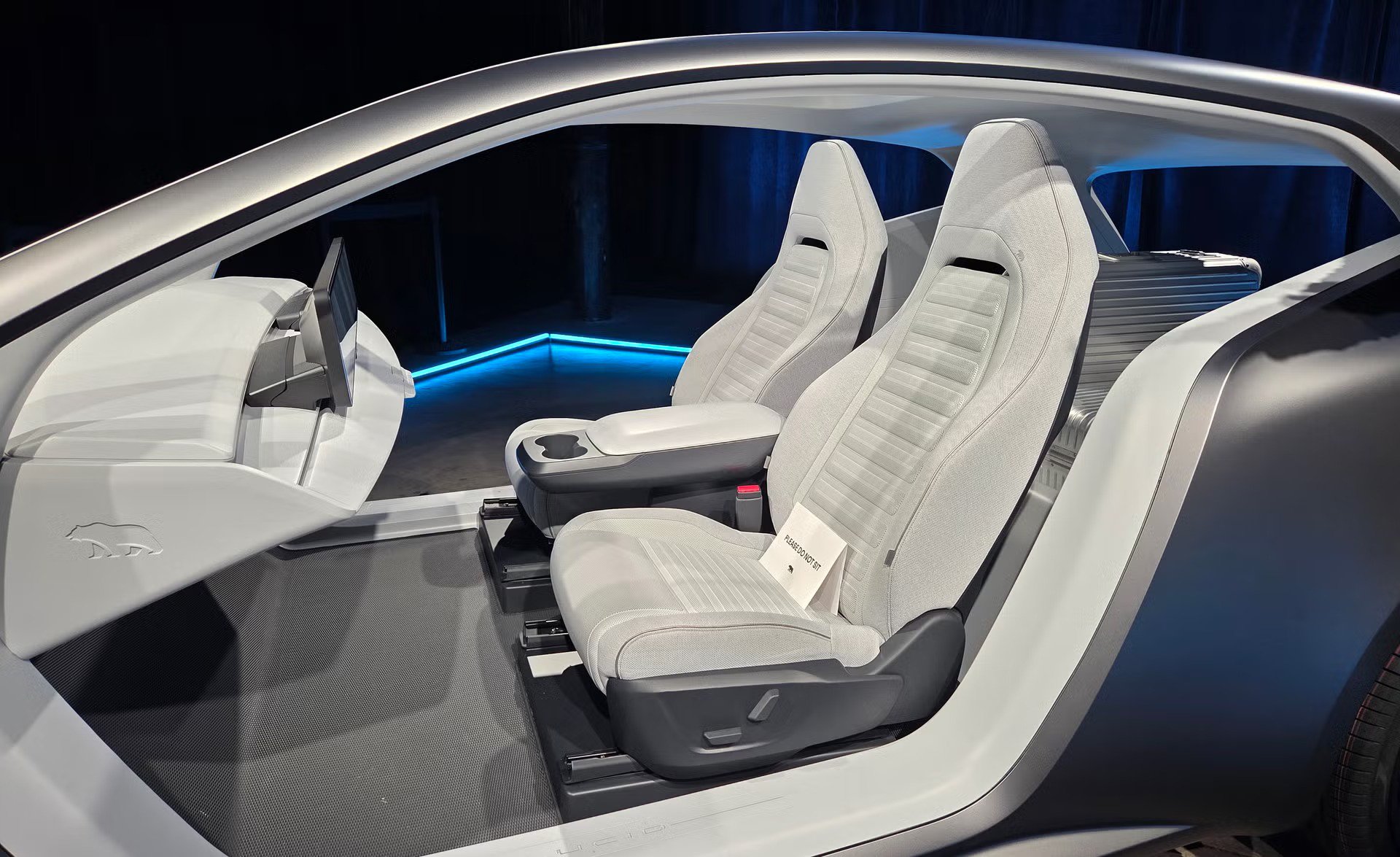
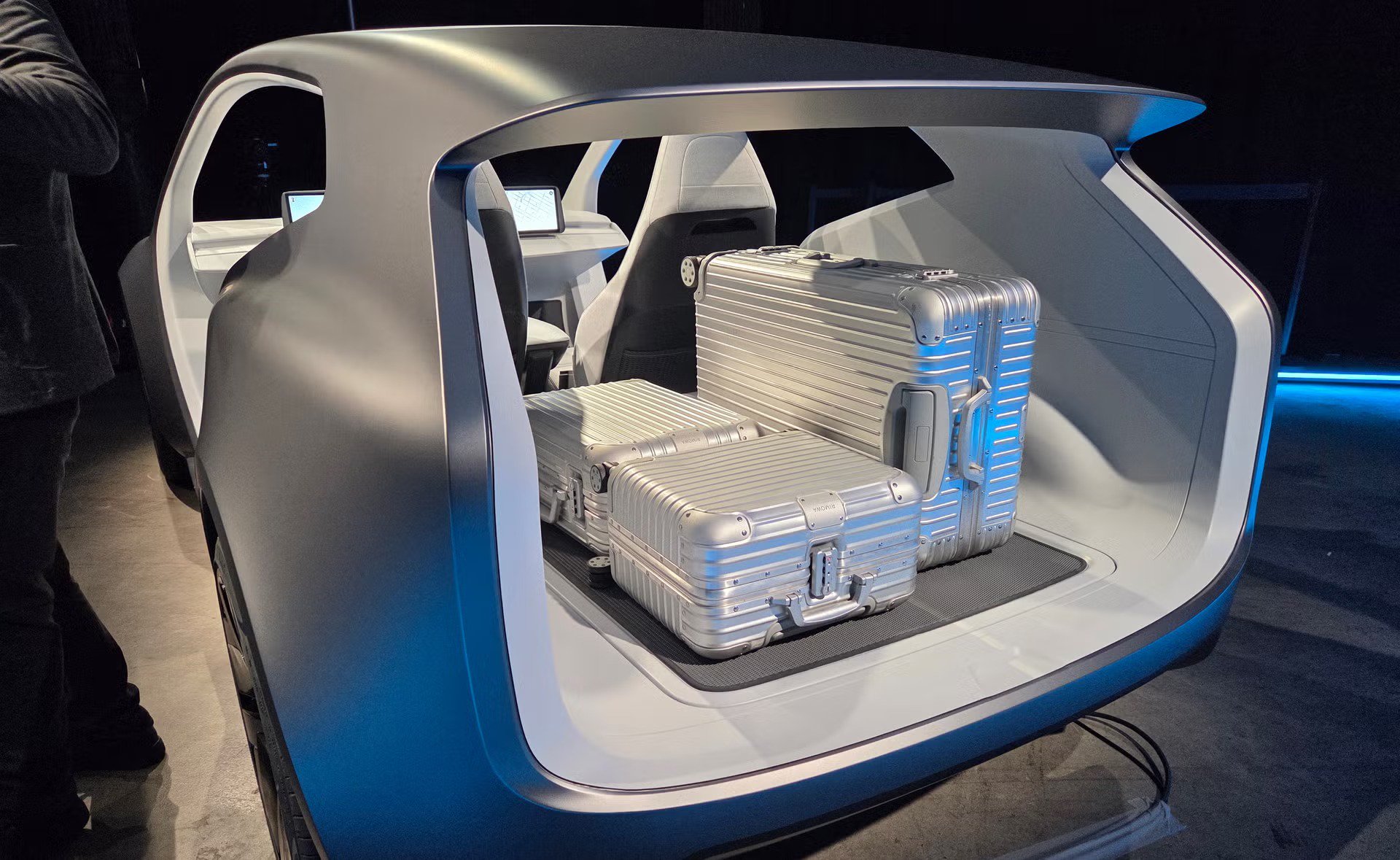
Then came the evening's biggest surprise: a fourth vehicle, called Lunar. The concept targets robotaxi use with a two-seat layout and generous cargo space. The example on display had no doors, giving onlookers a clear view of the interior and cargo bay. It shares the same wide dashboard display but eliminates the steering wheel, and is built on an abbreviated version of the mid-size platform that makes it smaller and lower than the Cosmos. Its design brief centered on maximum energy efficiency and minimum cost.
Walker was emphatic that the Lunar has not been approved for production and was shown purely to demonstrate the platform's flexibility. Despite sharp criticism from industry observers toward the concept of two-seat robotaxis, Walker outlined the underlying logic and how the economics of fleet operation differ from retail vehicle ownership.
More than 90 percent of current Uber trips carry just one or two passengers, which means a two-seat EV can be smaller, lighter, and cheaper to run because a smaller battery charges faster while still covering the same distance. Shaving 1 kilowatt-hour from the battery pack saves a robotaxi operator $1000 annually on a vehicle covering 100,000 miles per year. The Lunar concept could achieve efficiencies of 5.5 to 6 miles/kWh—nearly double the mixed-use figure of a four-seat compact electric SUV.
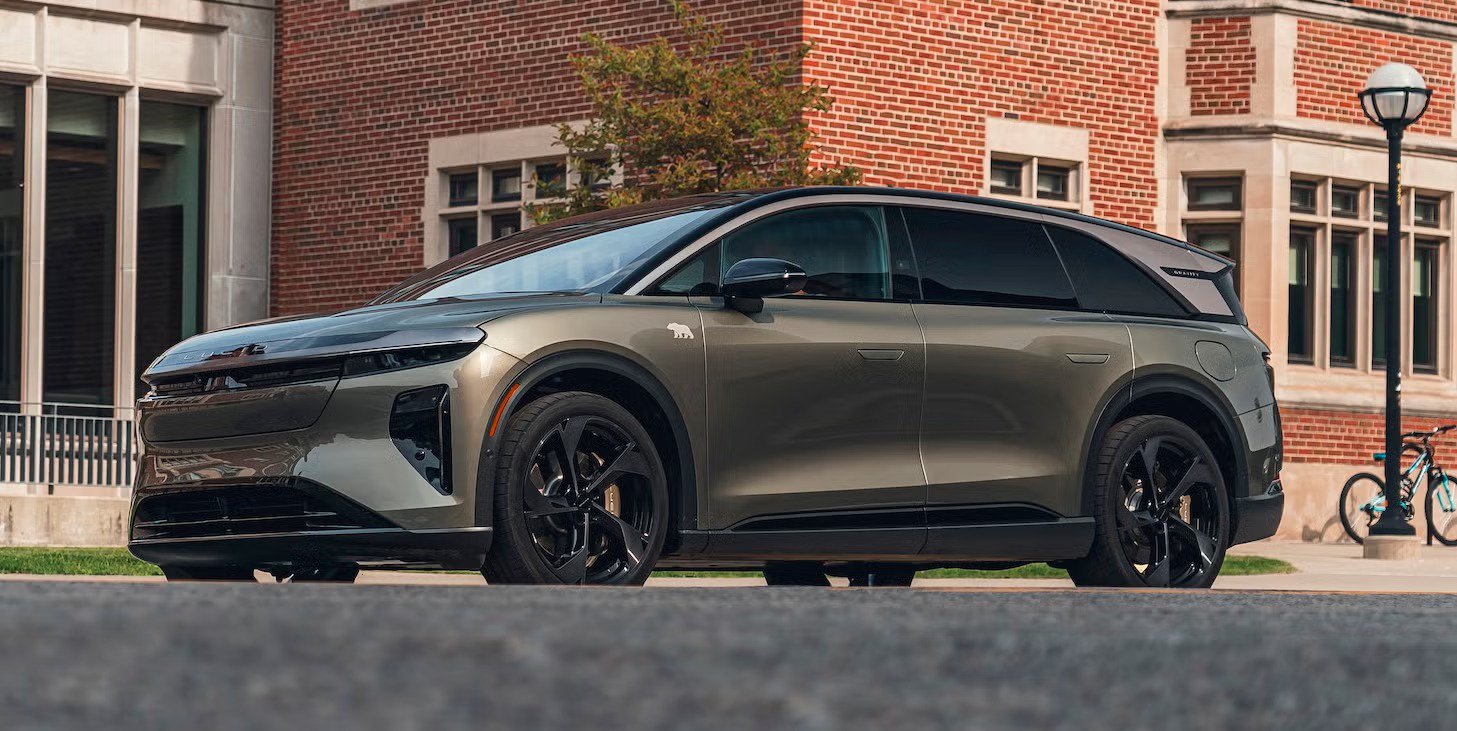
Walker elaborated on the "virtuous circle" linking weight reduction and battery downsizing in a purpose-built two-seat robotaxi. As one example: Lucid's suspension is engineered for spirited driving and sharp handling, but a robotaxi that will never be pushed to the limit can use a simpler, cheaper setup—eliminating not only expensive bushings but in some cases structural reinforcements designed purely to handle peak cornering loads.
The Lunar, for all the attention it attracted, remains a concept. The Lucid Cosmos—which we'll see at its public reveal in a matter of months—is what truly matters. If it delivers on the company's promises, it could be not just a more accessible, efficient smaller EV, but an engaging one to drive, continuing the tradition its predecessors have established.